

Pune Residents Voice Anger Over Unchecked Encroachments and Ineffective Civic Action
The widespread proliferation of illegal encroachments across various neighborhoods in Pune, coupled with the perceived ineffectiveness of sporadic enforcement measures, has ignited a wave of strong reactions from citizens. From traffic gridlock to safety risks, the issue is impacting daily life, prompting calls for systemic change and stricter implementation of regulations.
Traffic and Safety Hazards at Major Junctions
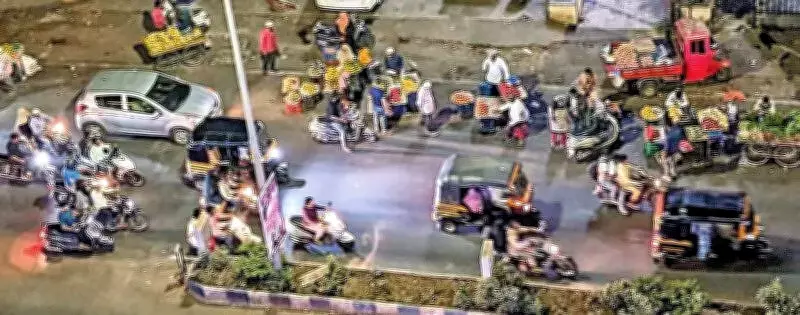
At Bhakti Shakti Chowk, illegal stalls have not only caused severe traffic congestion but also led to accidents, highlighting the urgent need for intervention. Multiple attempts by the Pune Municipal Corporation (PMC) to relocate these hawkers have repeatedly failed, underscoring a lack of sustainable solutions.
Citizen Testimonials Highlight Widespread Problems
Harikrishnan Pillai, a student, emphasized that the civic body must enforce strict 'no-hawker' zones in already crowded locations to prevent further chaos. He suggested moving vendors to dedicated hawker plazas and monitoring their growth to ensure order.

Lubaina Patel, a teacher from Salunkhe Vihar, described the streets as a nightmare, chock-a-block with vendors. She called for strict implementation of existing rules, allocation of specific spaces for vendors, and creation of parking facilities for customers to alleviate the situation.
Pratik Surana, a businessman in Baner, pointed out encroachments on reserved hill areas earmarked for the biodiversity park (BDP) zone, along with restaurants occupying footpaths for seating and parking. He criticized the negligible civic drives and urged tougher action against such establishments.
Praveen Srivastava, a retired colonel from Aundh, noted that hawkers seem to have a licence to set up shop anywhere, often blocking footpaths. He reported that PMC officials occasionally take action but often leave after collecting small fees, and advocated for designated commercial areas for vendors.
Rishi Hasabnis, an IT professional in Balewadi, highlighted the difficulty of walking due to unauthorized shops, with no accountability for lapses. He stressed the need for systemic change at the grassroots level, proper implementation of safety rules, and increased awareness.
Sandeep Bhadkamkar, a businessman in Kothrud, a major student hub, mentioned hawkers encroaching on roads, setting up flexes, and occupying footpaths, creating safety hazards. He proposed an automated detection and penalization system to replace the current practice of fines that allow hawkers to get away easily.
Yasmin Charania, a business consultant in Kalyaninagar, described encroachments as a common issue and suggested converting civic-owned land into dedicated hawking zones with limited timings (8am to 8pm) to balance vendor livelihoods and resident peace.
Compiled Insights and Growing Demand for Solutions
Compiled by Rohan Nakate, these testimonials reflect a city-wide concern. Residents are urging the Pune Municipal Corporation to move beyond occasional actions and implement robust, long-term strategies. Key recommendations include creating dedicated hawker zones, enforcing strict no-encroachment rules, and improving monitoring systems to tackle the root causes of this persistent problem.






