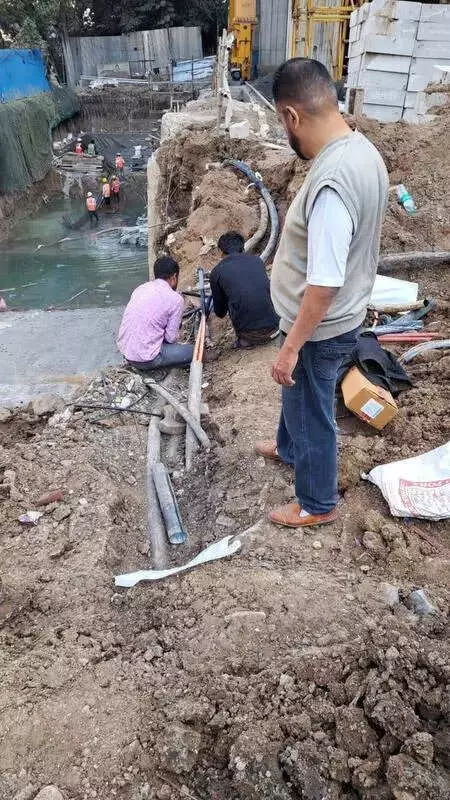
Pune Metro Construction Triggers Extended Power Cuts in Gharpure Colony
Residents of Gharpure Colony in Pune's Shivajinagar area have endured repeated power failures for three years. The disruptions started when construction began on the Hinjewadi–Shivajinagar Metro Line 3. A particularly severe outage struck last Friday around midnight. It lasted nearly eighteen hours, plunging hundreds of residents into darkness and discomfort.
Elderly Population Bears the Brunt of Persistent Blackouts
The colony consists of fourteen buildings housing approximately two hundred and fifty electricity consumers. Residents estimate that over half of the population are senior citizens. Power cuts create immediate crises by stopping elevators and water pumps. This makes basic daily activities extremely difficult for older people living alone.
Anuradha Sahasrabudhe, executive director of the NGO Dnyana Devi and a local resident, described the recurring issue. "This has happened at least three times in the last two weeks alone," she stated. "Digging for Metro Line 3 frequently severs underground cables. My mother is ninety-two years old. In my building, seventy percent of residents are seniors living independently. Without lifts or running water, life becomes a daily struggle. Imagine an emergency hospital visit—how would they manage the stairs?"

Damaged Feeder Cable Causes Widespread Disruption
Officials from the Maharashtra State Electricity Distribution Company Limited (MSEDCL) confirmed the cause. A feeder cable supplying three main transformers was damaged during Metro construction work. This fault affected not only Gharpure Colony but also Hardikar Hospital and the Akashwani office in the vicinity.
Manoj Chanchlani, a resident for more than five decades, noted the worsening situation. "Most Metro work occurs at night. When cables snap, the Metro team does not inform MSEDCL. Residents must file complaints themselves. Repairs typically only begin the next morning," Chanchlani explained. He recounted a recent incident where he personally paid laborers to excavate and expose a damaged cable. This allowed MSEDCL engineers to start repairs without delay.
MSEDCL Officials Cite Lack of Coordination with Metro Authorities
A senior MSEDCL official expressed clear frustration over the poor communication. "We have repeatedly asked Metro officials to notify us immediately when a cable is damaged. Recently, they damaged a cable and simply buried it. Our teams wasted hours just locating the fault," the official said.
The official detailed the laborious repair process. "Our staff must inspect the line manually, metre by metre. Heavy traffic on busy roads causes additional delays. Once we find the fault, repairs take another three to four hours."
MSEDCL has since repaired the main cable and restored power to the area. However, requests for comment from Metro officials regarding the coordination issues went unanswered.
The prolonged outages highlight a significant infrastructure challenge. They underscore the human cost of development projects when basic utilities are disrupted, especially for vulnerable elderly populations.