Pune, long celebrated as a culturally rooted and relatively secure city compared to India's bustling metros, now finds its safety reputation on shaky ground. Conversations with its residents reveal a growing sense of unease, painting a picture of a city caught in a fragile middle ground between security and vulnerability.
From Gangs to Politicians: The Historical Shift in Pune's Crime
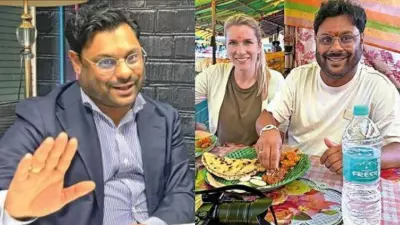
Advocate Asim Sarode, a prominent criminal and constitutional lawyer from Pune practising at the Supreme Court and Bombay High Court, provides a crucial historical lens. He notes that in the late 1990s, Pune was home to around 28 active criminal gangs primarily involved in petty offences. The landscape transformed as many gang leaders and associates entered the political arena, leveraging power and patronage to gain legitimacy. "Now these gundas are no longer gundas but politicians," Sarode observes.
This shift, he argues, has fundamentally altered the nature of crime in the city. Offences are no longer limited to street-level violence but have expanded into sophisticated areas like cyber fraud, digital extortion, juvenile drug trafficking, and large-scale economic crimes linked to lucrative land deals and urban expansion. Sarode points to a deeper institutional decay, where police responses often sidestep due process, breeding public mistrust. He warns that decades of sheltered corruption have normalized violence and communal tensions, desensitizing sections of society.
Ground Reality: Daily Unease and Uneven Security
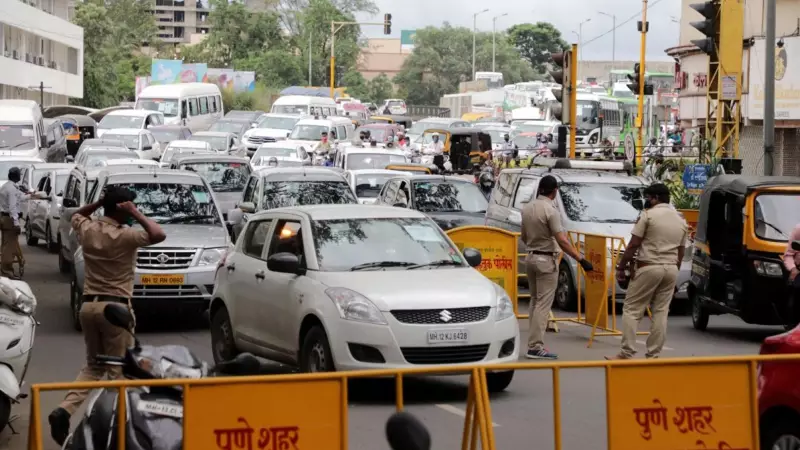
The lived experience of Pune's citizens confirms this persistent unease. A 50-year-old member of the Deccan Gymkhana Parisar Samiti, a lifelong resident, still believes Pune is safer than many Indian cities. However, daily life is shadowed by significant concerns. Rampant traffic violations, especially at night, pose a major threat due to non-functional signals, drunken driving, and road rage. Public intoxication frequently leads to harassment and littering in residential areas. While community groups actively alert authorities, the response is often frustratingly slow, though residents haven't lost hope for better enforcement.
For students and young migrants, the sense of safety is uneven and deeply influenced by identity. Law student Abhinav Shah feels secure within his hostel but acknowledges this comfort is shaped by his caste and religious privilege. He has witnessed implicit and explicit communal hostility, noting that friends from minority communities face discrimination. Pratyancha Sinha, a Symbiosis student living in Pune's Viman Nagar, rates her area's safety a cautious 6.5 out of 10. While she feels safer than peers in Delhi or Kolkata, incidents of catcalling and harassment in crowded spaces are common, making the city "fairly safe, but still scary as a non-local."
A City Sustained by Habit, Facing a Critical Juncture
Taken together, these diverse voices from across neighbourhoods point to a city at a critical crossroads. Pune, as of January 10, 2026, exists in a precarious balance—neither wholly unsafe nor completely secure. Its relative safety is often sustained more by habit and favorable comparison to other metros than by robust systemic assurance. Residents increasingly recognize that safety cannot rest on this relative comfort alone. The central challenge for Pune lies in acknowledging and addressing these everyday vulnerabilities—from traffic anarchy and digital crime to social discrimination—before they solidify into a far more dangerous reality. The city's future security depends on moving beyond its fragile middle ground.