Punjab's Economy Grapples with Financial Strain as Central Funds Dwindle
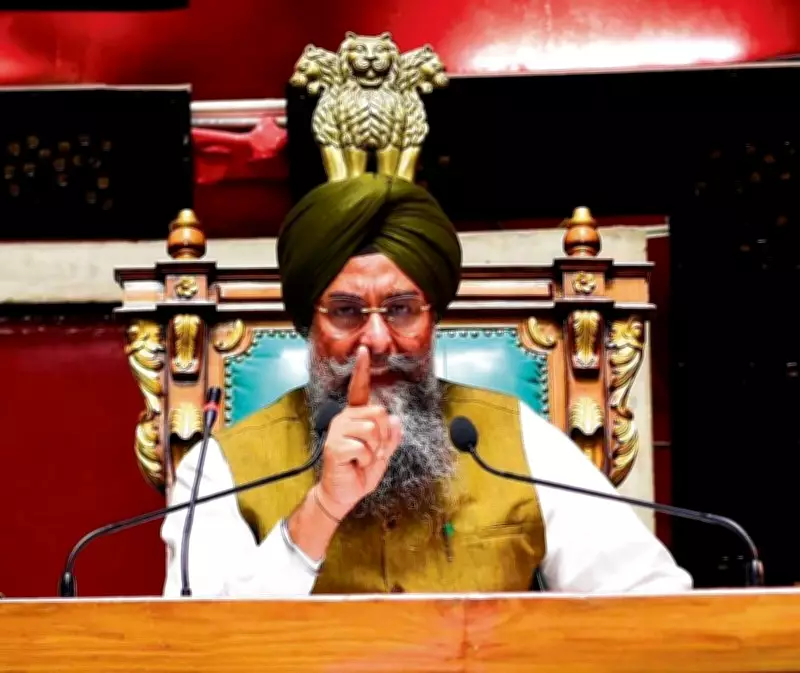
In a recent statement that has sparked discussions across political and economic circles, Punjab Assembly Speaker Kultar Singh Sandhwan has voiced concerns over the state's economic health, attributing significant challenges to a shortage of central funds. This revelation comes at a time when Punjab, like many other states in India, is navigating post-pandemic recovery and striving for sustainable development.
Speaker Sandhwan's Warning on State Finances
Kultar Singh Sandhwan, a prominent figure in Punjab's political landscape, emphasized that the state's economy is facing mounting pressures due to inadequate financial support from the central government. He pointed out that this lack of funds is hampering critical sectors such as agriculture, infrastructure, and social welfare programs, which are vital for Punjab's growth trajectory. Sandhwan's remarks underscore a broader issue of fiscal federalism in India, where states often rely on central allocations to meet their budgetary needs.
The speaker highlighted that without sufficient central assistance, Punjab is struggling to implement key projects and initiatives aimed at boosting employment and industrial output. This situation, he argued, could lead to long-term economic stagnation if not addressed promptly. Sandhwan called for a collaborative approach between the state and central governments to ensure that Punjab receives its fair share of resources, enabling it to overcome these financial hurdles.

Impact on Key Sectors and Public Services
The shortage of central funds has had a ripple effect across various domains in Punjab. In agriculture, which forms the backbone of the state's economy, farmers are grappling with issues like crop diversification and market access, exacerbated by limited funding for subsidies and support schemes. Infrastructure development, including roads and public transportation, has also seen delays, affecting connectivity and economic mobility.
Moreover, social welfare programs, such as healthcare and education, are facing constraints, potentially impacting the quality of life for Punjab's residents. Sandhwan stressed that these challenges are not just economic but also social, as they threaten to widen inequalities and hinder progress towards inclusive growth. He urged policymakers to prioritize financial allocations to Punjab, emphasizing that a robust state economy is crucial for national stability and prosperity.
Call for Policy Reforms and Collaborative Efforts
In response to these economic challenges, Speaker Sandhwan advocated for policy reforms at both state and central levels. He suggested that Punjab could explore alternative revenue sources, such as enhancing tax collection efficiency and promoting investment in emerging sectors like renewable energy and technology. However, he maintained that central support remains indispensable for addressing immediate financial gaps.
The speaker's comments have ignited a debate on the need for a more equitable distribution of funds among states, with many experts echoing his concerns. As Punjab continues to navigate these economic headwinds, Sandhwan's call for action serves as a reminder of the importance of fiscal coordination in India's federal structure. Moving forward, stakeholders are hopeful that dialogue and cooperation will lead to sustainable solutions for Punjab's economy.