Punjab-Himachal Entry Tax Dispute Escalates, Impacts Tourists and Commuters
The governments of Punjab and Himachal Pradesh are embroiled in a contentious dispute over a significant increase in entry tax imposed by the hill state, affecting major and minor roads. In response, Punjab has announced plans to levy a reciprocal tax on vehicles entering its territory from Himachal Pradesh. This escalating conflict is placing a heavy burden on commuters and tourists nationwide, particularly religious travelers from Delhi, Gujarat, and south India who often plan visits covering both states, now facing heightened travel expenses.
Roots of the Controversy
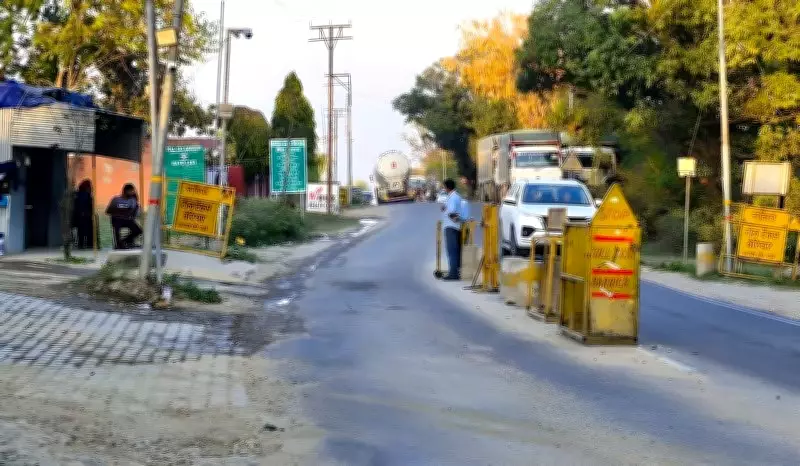
The core issue revolves around the entry tax implemented by Himachal Pradesh on vehicles entering the state, especially those registered outside Himachal. Collected at interstate barriers, this levy applies to private vehicles, commercial transport, buses, and goods carriers. While the tax has existed for decades, a recent sharp rise in rates has ignited widespread opposition and protests.
Historical Context and Recent Changes
The entry tax in Himachal Pradesh originates from the Himachal Pradesh Toll Act of 1975, initially targeting commercial vehicles. In 2003, it was extended to private vehicles, with a fee of Rs 30 applicable to all, including state-registered ones. The previous government (2017-2022) exempted Himachal-registered vehicles and increased the toll for out-of-state private vehicles to Rs 40. The current Congress government initially raised it from Rs 40 to Rs 70 and has now escalated it to Rs 170, effective from the next financial year starting April 1, 2026.

Key revisions include:
- Private cars: Increased from Rs 70 to Rs 170
- Mini buses: Increased from Rs 180 to Rs 320
- Buses: Increased from Rs 320 to Rs 600
- Heavy goods vehicles: Increased from Rs 720 to Rs 900
This represents one of the most substantial hikes in recent years, significantly impacting daily commuters and transport operators.
Protests and Public Outcry
Protests have primarily erupted in Punjab's border regions such as Ropar, Nangal, and Anandpur Sahib, where thousands cross into Himachal daily for work, business, education, and family obligations. Transporters and taxi operators from both states argue that the increased tax will elevate travel and logistics costs. Residents near the border, who rely on frequent travel, deem the tax unfair. Critics assert that such levies on national highways violate the principle of free interstate movement, leading to road blockades and threats of intensified agitation if the tax is not revoked.
Financial Implications and Government Stances
Himachal Pradesh anticipates generating over Rs 170 crore from entry tolls in the upcoming financial year, with more than 50 toll barriers across the state. The government justifies the hike as necessary to address financial constraints following the discontinuation of the Revenue Deficit Grant by the Union Government.
In contrast, Punjab has reacted vehemently, considering imposing a reciprocal entry tax on vehicles from Himachal Pradesh. AAP minister and MLA from Anandpur Sahib, Harjot Singh Bains, is spearheading Punjab's campaign, with potential appeals to the Centre or Supreme Court to challenge the levy's legality. Political leaders accuse Himachal of imposing an undue burden on neighboring states, transforming the issue into a potential interstate conflict.
Most Affected Groups
The worst-hit include border-area residents who frequently cross into the neighboring state, truckers, bus operators, and taxi drivers facing higher operational costs, as well as shops and eateries dependent on cross-border movement. Increased travel expenses could also adversely affect tourism to Himachal, deterring visitors and impacting local economies.
Future Prospects and Political Dimensions
Experts propose several solutions, such as exemptions or concessions for border-area residents and dialogue between Punjab and Himachal to resolve the dispute. The validity of these taxes on national highways is already under challenge in the Himachal High Court, with the matter sub judice.

The issue has rapidly assumed a political character. In Himachal, the ruling Congress defends the move as a revenue-generating measure, while the BJP labels it anti-people. In Punjab, the AAP government opposes the tax and explores countermeasures, raising concerns about a potential "tax war" between the states if retaliatory actions are taken. The outcome hinges on legal rulings and interstate negotiations, with significant implications for regional travel and commerce.