

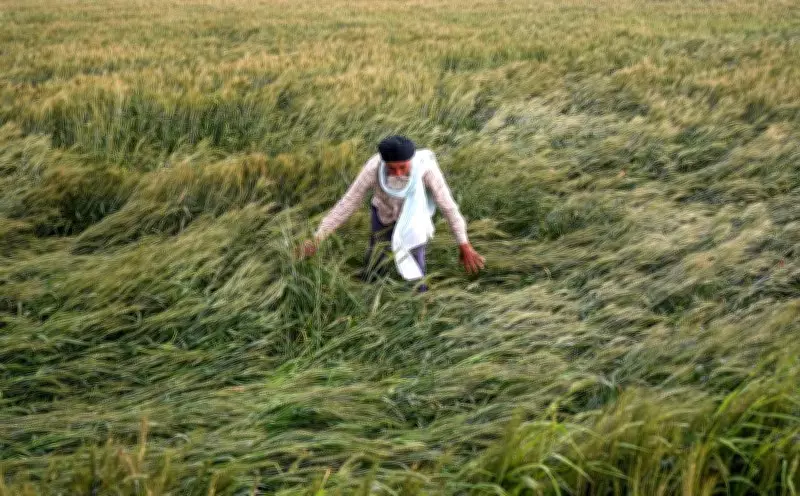
Western Disturbance Puts Punjab's Wheat Crop at Risk, Farmers on Edge
A significant western disturbance is currently posing a severe threat to Punjab's wheat crop, placing farmers in a state of high anxiety and uncertainty. This weather phenomenon, characterized by moisture-laden winds from the Mediterranean region, has the potential to cause extensive damage to the standing wheat fields across the state. The timing of this disturbance is particularly critical as it coincides with the crucial growth and maturation stages of the wheat crop, which is a staple agricultural product in Punjab.
Impact on Agricultural Output and Farmer Livelihoods
The western disturbance is expected to bring unseasonal rainfall and hailstorms, which could lead to lodging of crops, where wheat plants bend or break due to heavy moisture and wind. This not only reduces the quality of the grain but also significantly lowers the overall yield. Farmers, who have invested substantial resources and labor into this season's cultivation, are now facing the grim prospect of financial losses. The anxiety among the farming community is palpable, with many expressing concerns about their ability to recover from potential crop failures.
Experts warn that if the disturbance persists or intensifies, it could result in widespread crop damage, affecting Punjab's position as a major wheat-producing state in India. This situation underscores the vulnerability of agriculture to climatic variations and highlights the need for robust contingency plans. The state government and agricultural departments are closely monitoring the weather patterns and have advised farmers to take precautionary measures, such as draining excess water from fields and securing crops where possible.

Broader Economic and Food Security Implications
Beyond the immediate impact on farmers, a poor wheat harvest in Punjab could have ripple effects on the broader economy and food security. Punjab contributes a significant portion of India's wheat supply, and any shortfall in production might lead to increased prices and supply chain disruptions. This could exacerbate food inflation and affect consumers nationwide. Additionally, the state's economy, heavily reliant on agriculture, might experience a downturn if crop losses are substantial.
Farmers are urged to stay informed about weather updates and follow official guidelines to mitigate risks. The ongoing situation serves as a stark reminder of the challenges posed by climate change and the importance of developing resilient agricultural practices. As the western disturbance unfolds, all eyes are on Punjab's wheat fields, with hopes for minimal damage and a swift recovery for the farming sector.






