Puri Temple Town Emerges as Surrogate Campaign Ground for West Bengal Elections
In a remarkable demonstration of how state elections can spill across geographical boundaries, the sacred temple town of Puri in Odisha has become an unexpected arena for indirect political campaigning connected to the poll-bound state of West Bengal. Located approximately 500 kilometers from the intense political battleground of Bengal, Puri is witnessing a proliferation of election posters from various political parties strategically positioned to capture the attention of the steady influx of Bengali tourists.
Strategic Placement in Tourist Hotspots
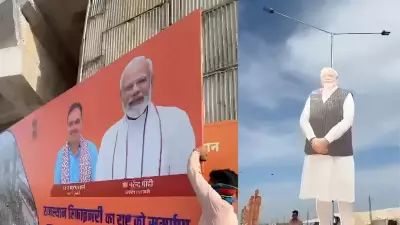
The marine drive area, particularly near Swargadwar beach and the railway station, has been dotted with banners and posters aimed directly at Bengali visitors. Swargadwar beach, often referred to as a "mini-Bengal" due to its perennial hustle and bustle of Bengali tourists, has effectively transformed into a zone of indirect electoral communication. This phenomenon highlights the deep cultural and social ties between the two regions, with politics transcending state lines.
According to official data from the Odisha tourism department, West Bengal stands as the largest source of domestic tourists for the state, contributing an impressive 1,539,834 visitors in 2024 alone. This figure represents 14% of Odisha's total domestic tourist arrivals, which reached 10,998,819, with the majority of these visitors making their way to Puri. The significant tourist flow has created a unique opportunity for political outreach.

Servitors and Local Involvement in Political Messaging
Manoranjan Tripathy, a local guesthouse manager, expressed astonishment at the development, stating, "It feels as though Puri has turned into an extension of Bengal's electoral theatre. We have never witnessed such indirect campaigning for another state's elections here before." Adding a layer of complexity to this cross-border political influence, several servitors of the revered Jagannath temple have reportedly been engaging with Bengali devotees on behalf of political parties.
Both the Trinamool Congress (TMC) and the Bharatiya Janata Party (BJP) are said to have enlisted servitors and local contacts to facilitate connections with visitors during temple interactions. Shyama Pujapanda, a servitor, explained the dynamic, saying, "Bengalis hold deep devotion for Lord Jagannath and respect us as sevaks. Because so many devotees interact with us daily, candidates approach us for indirect canvassing—and we find ourselves drawn into it."
Another servitor, Krushna Chandra Samantaray, openly admitted to his involvement, revealing, "We have put up BJP posters and are reaching out to Bengali visitors to ensure our candidates win." This active participation by temple servitors underscores the blending of religious devotion with political activism in this unusual scenario.
Political Dynamics and Controversies
The political maneuvering in Puri has not been without its controversies. Sources indicate that several TMC posters near the beach, which focused on the ruling party's development agenda, were mysteriously removed by unknown individuals. This incident points to the competitive and sometimes covert nature of the campaigning efforts.
In a particularly notable development, Daitapati servitor Ramakrushna Dasmohapatra disclosed that he had conducted a special puja for West Bengal Chief Minister Mamata Banerjee. He stated, "She has Lord Jagannath's blessings. Along with my colleagues, I am indirectly canvassing for her by invoking the deities and meeting Bengali guests." It is worth noting that Dasmohapatra was suspended last year by the Puri Jagannath temple administration over a controversy surrounding the naming of Digha's Jagannath temple, adding a layer of intrigue to his current political activities.
However, not all servitors are aligned in their political assessments. Jagannath Swain Mohapatra, another servitor, remarked, "From my interactions with devotees, I sense people are looking for change." This divergence of opinion among servitors reflects the broader political uncertainties and varied perspectives within the electorate.

Tourist Reactions and Ground Realities
Tourists from West Bengal have expressed mixed reactions to encountering their home state's political ambience in Puri. Suyro Basu, a visitor, shared his amusement, saying, "We didn't expect Bengal's poll atmosphere in Puri. Though BJP has gone all out with posters here, the ground reality back home is different. TMC remains strong."
Conversely, another tourist, Mohan Chakraborty, offered a contrasting view, stating, "West Bengal has been lagging for years. Unemployment, violence, and corruption are rising. Mamata's aggressive politics may face a stiff challenge this time." These reactions highlight the polarized nature of the political discourse and the varying perceptions among the electorate.
This unique case of cross-border election campaigning in Puri illustrates how politics often transcends geographical boundaries, especially in regions with strong cultural, social, and religious connections. The involvement of temple servitors, strategic poster placements, and targeted outreach to tourists underscore the innovative methods employed by political parties to influence voter sentiment beyond their immediate constituencies.