

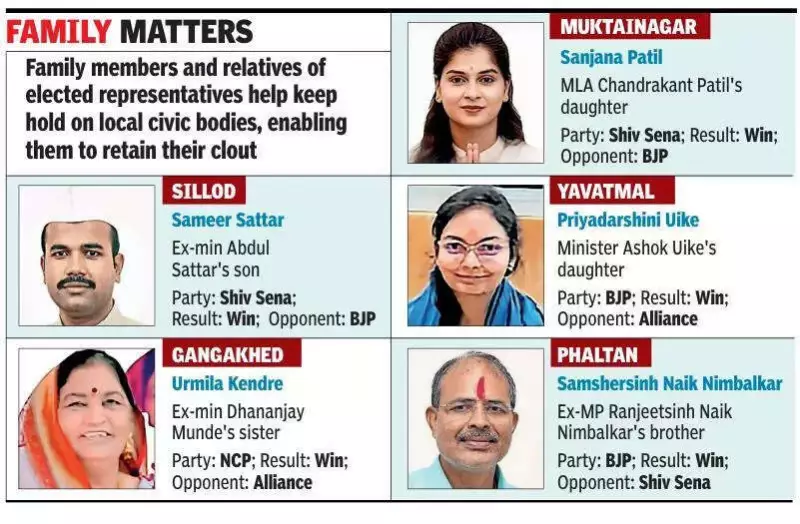
The results of the municipal council elections declared on Sunday in Maharashtra have highlighted a significant trend: the dominance of political families. Family members of sitting ministers, Members of the Legislative Assembly (MLAs), and Members of Parliament (MPs) secured comfortable victories, with relatives winning the president's post in at least 17 councils.
A Trend of Unopposed and Comfortable Wins
Despite pre-election rhetoric from parties about rewarding dedicated workers, tickets for the powerful president posts were frequently handed to relatives of established leaders. Two ministers saw their relatives win unopposed even before the polls. Sadhana Mahajan, wife of heavyweight minister Girish Mahajan, won unopposed from Jamner municipal council. Similarly, Nayankumar Rawal, the mother of BJP minister Jaykumar Rawal, secured an unopposed victory in Dhondaicha.
The trend continued with contested seats. Rajani Savkare, wife of minister Sanjay Savkare, won from Bhusawal. In Yavatmal, minister Ashok Uike's daughter, Priyadarshini, clinched the Nagar Parishad president's seat. The BJP fielded the highest number of such candidates, with a total of eight relatives of prominent leaders contesting.

Wins Across Party Lines
The practice was not confined to the ruling BJP. The Shiv Sena faction led by Eknath Shinde gave tickets to four relatives. Sanjana, daughter of Shiv Sena MLA Chandrakant Patil, won the president's post in Muktainagar. The Nationalist Congress Party (NCP) group under Ajit Pawar also saw success with its candidates. Mohini Naik, wife of minister of state Indraneel Naik, won from Pusad, and Urmila Kendre, sister of ex-minister Dhananjay Munde, won from Gangakhed.
Even in the opposition camp, few relatives who contested faced defeat. Junaid, son of ex-MLA Babajani Durrani from Pathari in Parbhani district, was among those who lost.
Experts Decry the 'Heir' Culture in Politics
Political observers note that this marks a change in Maharashtra's political landscape, a state historically known for grassroots leaders rising from village sarpanch to ministerial positions. Figures like former Congress chief minister Vilasrao Deshmukh and former home minister R.R. Patil began their careers as village sarpanches.
Professor Ravindra Bhanage of Shivaji University, Kolhapur, explained the rationale. "Prominent leaders choose their close relatives as their heirs and want to promote them by getting tickets for them," he said. He added that parties comply because these heirs possess "electoral merit"—a ready-made network of workers, financial strength, and the advantage of caste or religion in their constituencies.
This shift, experts argue, leaves ordinary party workers with little hope of securing such leadership opportunities, consolidating political power within family circles rather than rewarding grassroots service.






