RSS is the Devil: BJP and Congress Clash in Karnataka Over Priyank Kharge's Remarks
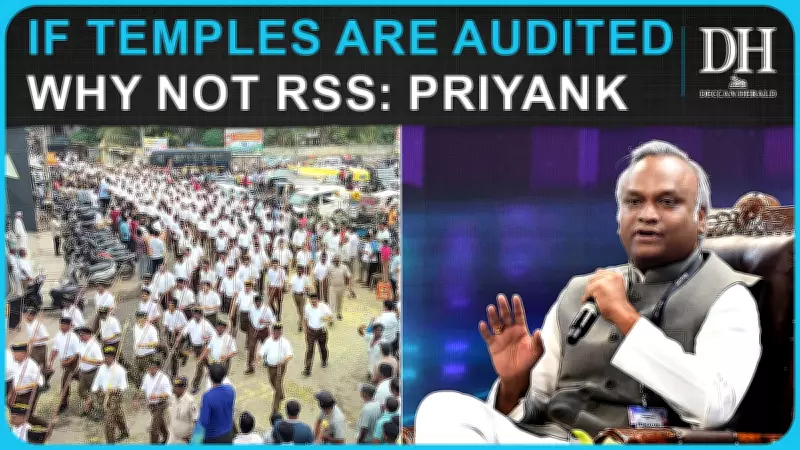
A fierce political confrontation has erupted in Karnataka, with the Bharatiya Janata Party (BJP) and the Indian National Congress locked in a heated exchange following controversial statements made by Congress leader Priyank Kharge. The controversy centers on Kharge's characterization of the Rashtriya Swayamsevak Sangh (RSS) as "the devil," sparking a war of words that has intensified the already charged atmosphere in the state.
Priyank Kharge's Provocative Comments
Priyank Kharge, a prominent Congress leader and the son of Congress president Mallikarjun Kharge, made the remarks during a public event in Karnataka. He accused the RSS of promoting divisive ideologies and undermining the secular fabric of India. Kharge stated, "The RSS is the devil that is trying to destroy the unity and diversity of our nation. Their agenda is against the principles of democracy and social harmony." His comments were part of a broader critique of the BJP's alleged alignment with RSS ideologies, which he claimed are detrimental to Karnataka's social cohesion.
BJP's Furious Backlash
The BJP swiftly condemned Kharge's remarks, labeling them as inflammatory and disrespectful. Senior BJP leaders, including state party president Nalin Kumar Kateel, demanded an immediate apology from Kharge and the Congress. Kateel asserted, "Priyank Kharge's comments are not only offensive but also reveal the Congress's desperation to malign nationalist organizations. The RSS has always worked for the welfare of society, and such baseless allegations will not be tolerated." The BJP also accused the Congress of using divisive rhetoric to gain political mileage ahead of the upcoming state elections, warning that such tactics could backfire.

Congress's Defense and Escalation
In response, the Congress stood by Kharge's statements, with party spokespersons arguing that he was merely highlighting the perceived threats posed by the RSS to India's pluralistic values. Congress leader Siddaramaiah, a former chief minister of Karnataka, supported Kharge, saying, "Priyank Kharge has spoken the truth. The RSS's ideology is a danger to our constitutional values, and it is our duty to expose it." The Congress further accused the BJP of deflecting from core issues like governance and development, instead focusing on defending the RSS to divert public attention.
Political Implications in Karnataka
This clash comes at a critical juncture for Karnataka politics, with both parties gearing up for state assembly elections. The controversy has:
- Amplified the ideological divide between the BJP and Congress, with each side leveraging the issue to mobilize their respective voter bases.
- Raised questions about the role of the RSS in Indian politics, a topic that often sparks intense debate during election seasons.
- Potentially influenced public perception, as voters weigh the parties' stances on nationalism, secularism, and social harmony.
Political analysts suggest that such confrontations could shape the electoral narrative, making identity politics a central theme in the upcoming polls. The BJP is likely to frame the Congress as anti-national, while the Congress may position itself as a defender of secularism against RSS influence.
Broader National Context
The Karnataka clash reflects a larger pattern of political skirmishes across India, where the RSS frequently becomes a flashpoint between the BJP and opposition parties. Similar disputes have occurred in states like Maharashtra and Kerala, highlighting the enduring tension over the organization's role in public life. This incident underscores how regional political battles can quickly escalate into national debates, especially when involving high-profile leaders like Priyank Kharge.
As the war of words continues, both parties are expected to intensify their campaigns, with the RSS controversy likely to remain a key talking point. The outcome of this clash could have lasting effects on Karnataka's political landscape, influencing alliances and voter sentiment in the months to come.