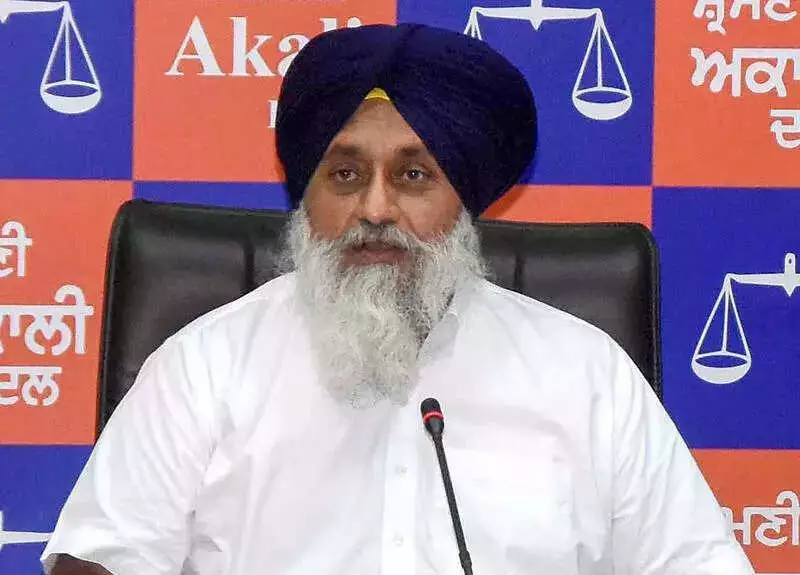
In a significant political assessment, Shiromani Akali Dal (SAD) President Sukhbir Singh Badal has asserted that his party performed at par with the Congress party in the recent zila parishad and block samiti elections across Punjab, based on the critical metric of strike rate. Badal made these claims while addressing and honouring victorious party candidates from the Muktsar region at his residence in Badal village on Friday.
Strike Rate Analysis: SAD vs Congress
Elaborating on the numbers, Sukhbir Singh Badal presented a detailed comparison. He stated that in the block samiti elections, the Shiromani Akali Dal secured victory in 445 seats out of the 1,814 it contested. In contrast, the Congress party won 612 seats out of a much larger pool of 2,487 seats it fought for. Badal emphasized that the strike rate—the percentage of seats won from those contested—was remarkably similar for both major traditional rivals.
The SAD president argued that his party's overall strike rate was actually better, as it had contested 673 fewer seats than the Congress. He attributed this lower number of contests to the large-scale rejection of nomination papers filed by SAD candidates, a point he used to level serious allegations against the ruling party.

Allegations of Unfair Means Against AAP Government
Sukhbir Singh Badal launched a direct attack on the Aam Aadmi Party (AAP) government, accusing it of employing unfair tactics to influence the election process. He claimed that the AAP administration specifically targeted the SAD because it feared the party the most.
Badal presented startling figures to back his allegations. He stated that the AAP managed to get 351 of its candidates elected unopposed to the block samitis, which have a total of 2,838 seats. Furthermore, he alleged that the authorities succeeded in getting a massive 1,024 nomination papers of SAD candidates rejected on what he described as "flimsy grounds." In some instances, he claimed, nomination papers were simply torn up.
Key Victories and Future Prospects
Despite the alleged hurdles, Badal highlighted several areas of success for the SAD. He pointed to significant performances in the districts of Bathinda, Muktsar, and Faridkot. Based on these results, he expressed confidence that the party would be able to get its candidates elected as the chairpersons of the zila parishads in these three districts.
The party's prospects also look bright at the block level. Sukhbir Badal indicated that the SAD is likely to secure the chairperson's position in nearly 15 block samitis. A notable development aiding this is in the Mansa block samiti, where an independent candidate, Raswinder Singh from Chakriya village, has joined the SAD. This move increases the party's strength to 13 members in the 25-member house, bolstering its position.
He specifically congratulated the Muktsar assembly unit of the party, led by Kanwarjit Singh Barkandi, for an exemplary performance. In the Muktsar constituency, SAD candidates won both available zila parishad seats and 17 out of the 20 block samiti seats they contested.
AAP's Home Turf Setbacks
In a final jab at the ruling party, the SAD president pointed out a perceived weakness within the AAP ranks. He noted that nearly a dozen senior AAP leaders, including sitting ministers and Members of the Legislative Assembly (MLAs), were unable to ensure victory for their party's candidates in their own home constituencies during the block samiti elections. This, according to Badal, signals a disconnect between the AAP's state-level leadership and the grassroots electorate.
The statements from the SAD chief set the stage for a contentious political narrative in Punjab, framing the local body election results not just as a numerical outcome but as a battle marred by alleged administrative interference, with the Shiromani Akali Dal positioning itself as a resilient force fighting against the odds.