

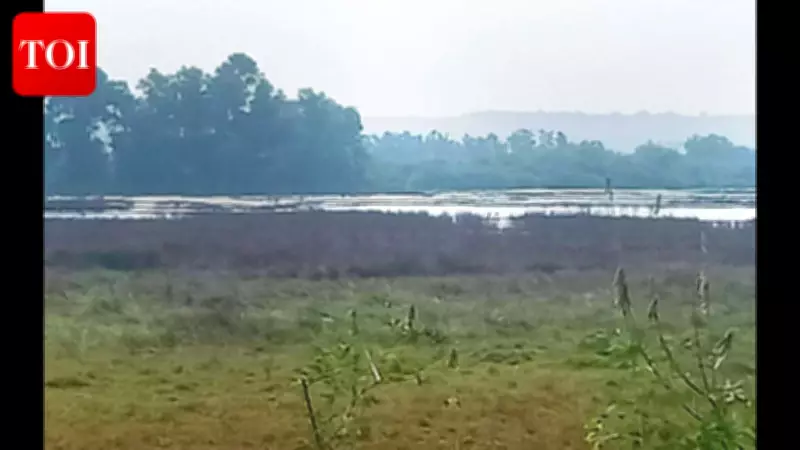
Goa Farmers Confront Renewed Saline Water Crisis in Khazan Lands
Farmers belonging to the Neura O Grande Tenants’ Association are once again facing significant distress as saline water has flooded the khazan agricultural area, reaching all the way to the panchayat building. This alarming situation has emerged despite no reported breaches in the protective bundhs that typically safeguard these fertile lands.
History Repeats: Similar Incident Occurred Two Months Ago
This is not an isolated event. Just two months prior, a similar influx of saline water originating from a damaged Damda sluice gate in Neura severely affected farmers in the Dongorim region. The association has now formally lodged a complaint with the Tiswadi mamlatdar, highlighting that the current flooding is actively disrupting cultivation efforts crucial for the ongoing kharif season.
The water level has risen so significantly that it has reached the panchayat building, which is situated on reclaimed khazan land near the Pilar–Old Goa road. A local farmer provided a cautious update, stating, “The water level has reached cultivated fields in Neura, but no substantial damage has been done yet.” However, the threat to crops remains imminent.

Understanding the Cause of Saline Water Ingress
Saline water intrusion into khazan areas typically occurs due to one of three primary reasons: breaches in the protective embankments (bundhs), damage to sluice gates, or the deliberate opening of these gates during high tide. Interestingly, while the bundhs in Neura were recently repaired at an approximate cost of Rs 9 crore, farmers are now pointing fingers at potential human factors.
They allege that a few among the nine sluice gate operators might be responsible for the current crisis. This suspicion is fueled by past events. Earlier, farmers had accused sabotage behind the flooding in Dongorim, where extensive tracts of fields spanning from Agasaim to Carambolim were submerged due to bundh breaches.
Allegations of Deliberate Action and Calls for Security
Ramrao Wagh, convenor of the Khazan Action Committee, voiced a serious allegation. “The flooding is due to the deliberate release of saline water for fishing purposes,” he stated. Wagh further emphasized the practical challenges in monitoring the vast agricultural fields, making effective surveillance difficult. He has called for increased police patrolling in the area to prevent such incidents.
Wagh also highlighted a longstanding demand from the farming community. “Farmers are keenly awaiting the formation of a khazan board, as was assured to AAP MLA Cruz Silva in the Goa legislative assembly,” he said. The establishment of such a board is seen as a vital step towards better management and protection of these critical agricultural zones from recurring saline water threats.






