Supreme Court Mandates June 2026 Deadline for Bengaluru Civic Elections
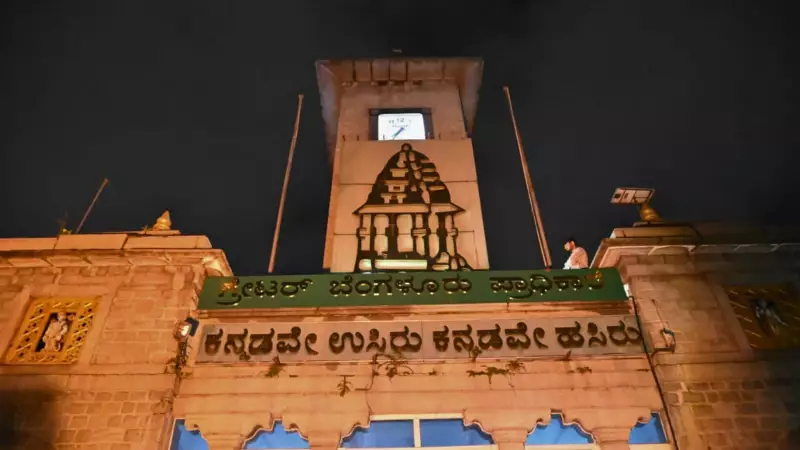
The Supreme Court of India has issued a firm directive to the Karnataka government. It must conduct the long-delayed elections for the Greater Bengaluru Authority by June 30, 2026. This order has injected urgency into the political landscape of India's tech capital.
Political Leaders Await Clarity on Ward Reservations
Political parties across Karnataka are now in a state of anticipation. They are waiting for the final publication of the ward-wise reservation list. The state government published a draft reservation matrix for the five new city corporations last Thursday. This draft covers all 369 wards within the Greater Bengaluru area.
The government has allowed time until January 23, 2026, for stakeholders to raise objections. However, the Supreme Court bench, led by Chief Justice Surya Kant and Justice J K Maheshwari, has set a stricter timeline. It has ordered the government to publish the final reservation list by February 20, 2026.

A Decade-Long Wait for Civic Polls
The last municipal elections in Bengaluru took place in August 2015. Their tenure officially concluded in 2020. Since then, a combination of legal challenges and administrative restructuring has repeatedly postponed fresh polls. This delay forced the state to appoint IAS officers as administrators to run the city's civic affairs.
Historically, civic governance in Bengaluru has seen irregular elections. Between 2001 and 2025, only three elections were held for the Bruhat Bengaluru Mahanagara Palike. This falls short of the expected five elections in that period. The old BBMP council comprised 198 wards. The newly formed Greater Bengaluru Authority will now encompass a significantly larger 369 wards.
Government Assures Readiness Amid Objections
Karnataka Deputy Chief Minister D K Shivakumar, who also holds the Bengaluru Urban Development portfolio, has stated the government's preparedness. "The State Election Commission has submitted an affidavit before the court," he said. "The government will give all necessary directions. We need to conduct zilla, taluk, and panchayat elections as well. We will do whatever is necessary under the constitutional amendments for local bodies."
Shivakumar addressed the wave of objections regarding ward renaming, coverage areas, and the reservation matrix. He confirmed the formation of a committee to examine technical objections. "There is talk that reservation for women is not adequate. We will direct them to look into it. We will not interfere," he assured. When asked about seeking more time from the court, the deputy chief minister firmly stated he would not request an extension.
Parties Grapple with Ticket Aspirants and Alliance Dynamics
The prolonged election hiatus has created unique challenges for political parties. The pool of ticket aspirants has swollen considerably. The Congress party alone has reportedly received 759 applications from hopeful candidates.
Meanwhile, the potential alliance between the BJP and the Janata Dal (Secular) remains unclear. Both parties have not clarified whether they will contest the polls together or separately. The BJP has established internal committees to select candidates for each corporation. The JD(S) has held multiple meetings, both internally and with BJP leaders, to discuss the viability of an alliance.
A source within the BJP's state unit revealed a preference for going solo. "We have a good cadre base. If we go with the alliance, many fresh faces may lose their chance. This could discourage local leadership and potentially affect our voter base," the leader explained. This sentiment has reportedly been communicated to the party's high command.
Responding to queries about a potential friendly fight between the BJP and JD(S), Deputy CM Shivakumar remained dismissive. "Let them do whatever they want – fight separately or together. There would be a direct fight if they have the same arrangement they had for the Parliamentary elections," he remarked.
The stage is now set for a crucial electoral battle in Bengaluru. All eyes are on the state government to finalize the ward delimitation and reservation process, paving the way for democratic governance to return to the city after a long gap.