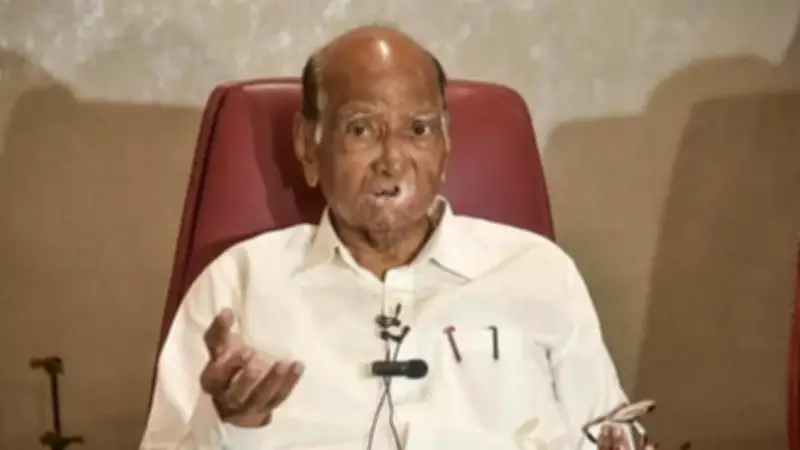
In a surprising revelation that has sent ripples through Maharashtra's political circles, veteran Nationalist Congress Party leader Sharad Pawar has claimed complete ignorance regarding the swearing-in ceremony of Sunetra Pawar as the state's Deputy Chief Minister. The seasoned politician made this unexpected disclosure during a press conference held in his traditional stronghold of Baramati, leaving journalists and political observers alike taken aback by his apparent detachment from what many considered a significant political development within his own family and party circles.
Media Reports as Primary Source of Information
Sharad Pawar revealed that he first became aware of the swearing-in event through various media reports, rather than through official party channels or direct family communication. This admission highlights an unusual disconnect within the political dynasty, particularly given the Pawar family's deep-rooted influence in Maharashtra politics spanning several decades. The octogenarian leader emphasized that he had received no formal notification or invitation regarding the ceremony, which has raised questions about internal communication protocols within the NCP and the broader political establishment.
Political Implications and Speculation
The revelation has sparked intense speculation about several crucial aspects of Maharashtra's political landscape:

- Family Dynamics: The apparent lack of communication between Sharad Pawar and his daughter-in-law Sunetra Pawar regarding such a significant political appointment suggests possible underlying tensions or strategic distancing within the family's political operations.
- Party Coordination: The situation raises questions about internal coordination mechanisms within the Nationalist Congress Party, particularly concerning high-profile appointments and ceremonial events involving prominent party members.
- Media's Role: Pawar's reliance on media reports for information about a family member's political advancement underscores the increasingly central role of journalism in political communication, even for insiders with decades of experience.
- Timing Considerations: The press conference in Baramati, coming after the swearing-in event, suggests possible strategic timing in Pawar's public acknowledgment of his lack of prior knowledge.
Historical Context and Political Significance
This development occurs against the backdrop of Maharashtra's complex political environment, where the Pawar family has maintained substantial influence for generations. Sharad Pawar's political career spans over five decades, during which he has served as Chief Minister of Maharashtra multiple times and held various significant positions at the national level. The appointment of Sunetra Pawar as Deputy Chief Minister represents a continuation of this political legacy, making Sharad Pawar's claimed unawareness particularly noteworthy.
The situation also reflects broader patterns in Indian politics where family dynasties sometimes experience internal divisions or strategic separations in their public political operations. Political analysts are closely watching how this revelation might affect:
- The working relationship between Sharad Pawar and his nephew Ajit Pawar, who leads another faction within Maharashtra politics
- Public perception of family unity within one of Maharashtra's most prominent political dynasties
- Future political alignments and power-sharing arrangements within the state government
Broader Implications for Maharashtra Governance
Beyond the immediate family dynamics, Sharad Pawar's statement raises questions about transparency and communication within the state's administrative and political structures. When a political veteran of Pawar's stature claims to learn about a deputy chief minister's appointment through media channels, it suggests potential gaps in official communication protocols that could have implications for governance efficiency and inter-departmental coordination.

The development also highlights the evolving nature of political communication in the digital age, where traditional channels of information sharing within political families and parties are increasingly supplemented or sometimes bypassed by media reporting and social media dissemination.
As Maharashtra continues to navigate its complex political landscape, this episode serves as a reminder of the intricate relationships and communication patterns that define Indian state politics. The coming days will likely reveal whether this represents a temporary communication lapse or indicates deeper structural changes within one of Maharashtra's most influential political families.