

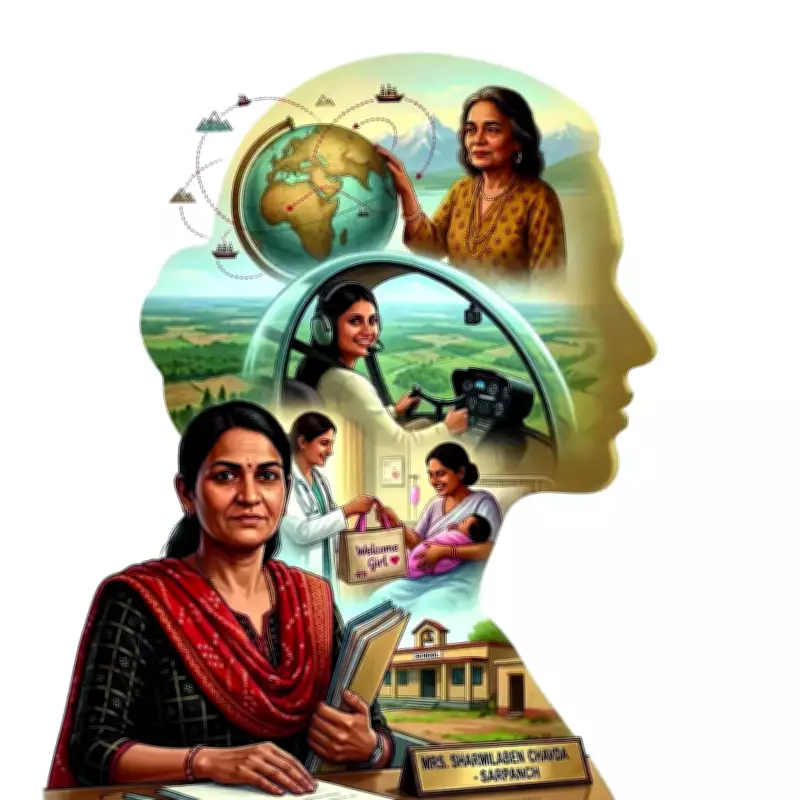
Sharmila Chavda: The Unlikely Sarpanch Who Transformed a Neglected Gujarat Village
Few expected much when Sharmila Chavda, a 45-year-old woman with no political pedigree, was elected as the sarpanch of Moti Marad in the 2022 gram panchayat polls. The village in Dhoraji taluka, Rajkot district, had been neglected for years, and she seemed an improbable candidate to turn things around. However, she proved all skeptics wrong, delivering roads, water, and dignity to a community of 10,500 people.
A Life Built for Hard Work and Resilience
Chavda was built for hard things long before she assumed the role of sarpanch. Her father, a mason, worked far from home for extended periods, while her mother battled a mental illness and frequent seizures, often leaving her unaware of her surroundings. By Class 9, Chavda was the one holding the household together, commuting 8 kilometers each way between her father's village, Vadodar, and Moti Marad to continue her education. She cared for two younger siblings and a mother who required constant attention, managing to cook simple meals like khichdi to keep her family fed.
Today, Chavda is a mother of two and credits her supportive husband for her success. "I grew up reading Babasaheb's teachings because my father was a staunch Ambedkarite," she says. "That gave me the fire to fight for basic rights. I didn't come here to be popular. I came to change lives." Chavda, who dropped out of her BA English program after the second year, has channeled this determination into tangible village improvements.

A Checklist of Achievements: From Promises to Reality
Under her leadership, Moti Marad has witnessed a remarkable transformation. Her list of achievements reads like a checklist, meticulously ticked off one by one:
- Repaired crumbling school buildings to ensure a safe learning environment for children.
- Repaired and paved most village roads, enhancing connectivity and accessibility.
- Installed gutter lines to improve sanitation and public health infrastructure.
- Set up a diesel kiln at the crematorium with donor assistance, respecting community rituals.
- Constructed a 9-lakh-litre water sump to resolve chronic water shortages that plagued the village.
Additionally, the panchayat switched to solar power under her guidance. "We were spending Rs 50,000-53,000 on electricity. After going solar, we have saved enough to cover the streetlight bills too," Chavda explains. This move not only reduced costs but also promoted sustainable energy practices.
Land Rights and Community Engagement: A Fight for Justice
Land disputes were another critical issue Chavda tackled head-on. Plotting grievances had remained unresolved for 15 to 20 years, but she took them directly to the collector. When approvals are finalized, 250 families will receive plots they had nearly given up hope of obtaining. "I went to collectors, donors, villagers who had left and made good elsewhere," she says. "I brought them all back as partners."
Dilipbhai Shekhat, a construction businessman based in Surat but originally from Moti Marad, attests to her efforts: "She reached out to me for the village gate project, and I donated Rs 7 lakh. I am always happy to serve my village and my community."
Village Transformation and Resident Testimonials
For residents like Sanjay Humbal, a solar contractor, the village has undergone a complete metamorphosis. "Earlier, the village's underserved localities were not taken seriously. In my locality alone, at least 25 development projects have been completed since she became sarpanch. She fights for every issue and has even made cleanliness a village priority," he shares.
Chavda's tenure has not been without resistance. Opponents have filed complaints and brought no-confidence motions, but none succeeded. "They tried to stop the work. They couldn't stop the people," she asserts. Notably, nearly 60% of the village population lives outside in search of work, yet even those who have left remain supportive of the changes, highlighting her broad impact.

Recognition and Future Aspirations
Her stellar work has drawn attention from the district administration, and she hosted the regional finale of the national "Meri Mitti Mera Desh" campaign, which was widely appreciated. Chavda has quietly raised funds from unexpected sources, emphasizing that her mission is collective. "This is not about me," she says. "It is about a village that finally believes it belongs."
Sharmila Chavda's story is a powerful testament to grassroots leadership and resilience, proving that with determination and community support, even the most neglected villages can thrive.





