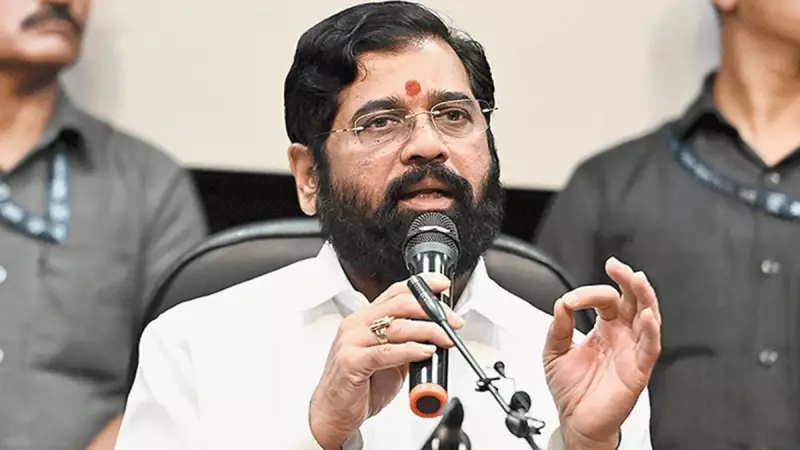
In a bold political statement, Maharashtra Chief Minister Eknath Shinde has openly declared that his decision to topple the previous government led by Uddhav Thackeray was driven by a commitment to protect the core ideology of Balasaheb Thackeray, the founder of Shiv Sena. Shinde emphasized that such a significant move in the state's political landscape requires immense courage and conviction.
Shinde's Justification for the Political Upheaval
Eknath Shinde, who currently heads the Maharashtra government, explained that his actions were necessary to preserve the principles and values established by Balasaheb Thackeray. He argued that under Uddhav Thackeray's leadership, the government had strayed from these foundational ideals, prompting him to take a stand. Shinde highlighted that this was not merely a power struggle but a ideological battle to realign the state's governance with Shiv Sena's original vision.
The Courage Behind the Move
Shinde stressed that toppling a government is no small feat and demands substantial bravery, especially in a politically charged environment like Maharashtra. He pointed out that his decision involved navigating complex alliances and facing potential backlash, yet he proceeded out of a sense of duty to Balasaheb's legacy. This move, according to Shinde, was essential to prevent the dilution of Shiv Sena's identity and ensure its continued relevance in state politics.

Impact on Maharashtra's Political Dynamics
The toppling of Uddhav Thackeray's government has significantly reshaped Maharashtra's political scene, leading to realignments and new power structures. Shinde's remarks shed light on the underlying motivations behind this shift, suggesting it was rooted in ideological preservation rather than personal ambition. This has sparked discussions about the future direction of Shiv Sena and its role in the state's governance, with implications for upcoming elections and policy decisions.
Reactions and Broader Implications
Shinde's statement is likely to elicit mixed reactions from political observers and the public, with some viewing it as a principled stand and others as a strategic maneuver. It underscores the ongoing tensions within Shiv Sena and highlights the challenges of maintaining ideological purity in a rapidly evolving political landscape. As Maharashtra continues to navigate these changes, Shinde's actions and justifications will remain a focal point in debates about leadership, loyalty, and the legacy of Balasaheb Thackeray.