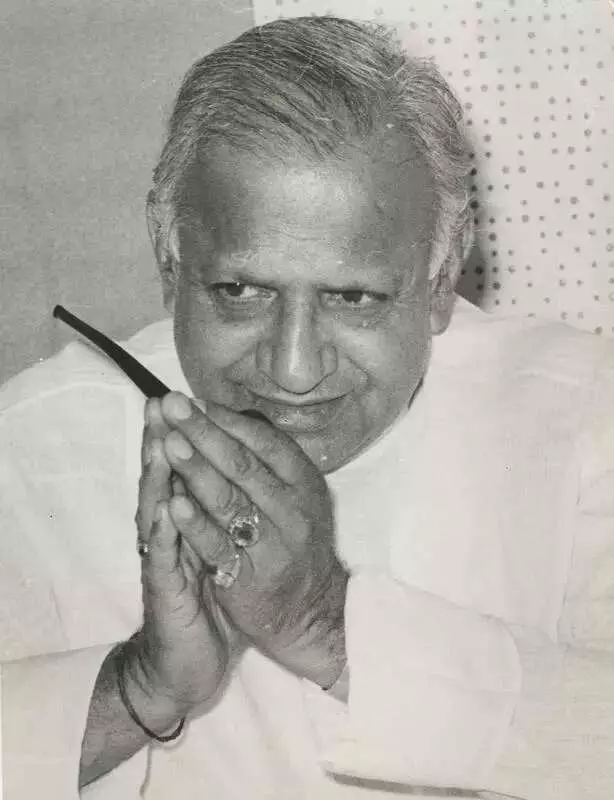
As current Chief Minister Siddaramaiah approaches a milestone that could see him surpass a long-standing record for longevity in office, political discourse in Karnataka has turned once more to the legacy of D Devaraj Urs. The former Chief Minister, who hailed from Mysuru like Siddaramaiah, set a benchmark for transformative governance between 1972 and 1980 that continues to define the state's social fabric.
The Architect of a Silent Social Revolution
D Devaraj Urs, who served as Chief Minister from 1972 to 1977 and again from 1978 to 1980, is revered as the 'champion of backward classes'. His administration engineered a profound shift in Karnataka's power dynamics by systematically reducing the dominance of traditional landed castes. He actively expanded political and economic opportunities for backward classes, Dalits, and minorities, an era often described as a 'silent revolution'.
A pivotal achievement was the landmark Land Reforms Act of 1974, championed under the slogan 'Land to the Tiller' (Uluvavanige Bhoomi). This radical legislation dismantled the exploitative tenancy system and facilitated the redistribution of land to landless peasants, a majority belonging to backward and Dalit communities. It remains one of the most significant agrarian reforms in the state's history.

Institutionalizing Social Justice and Reshaping Politics
Urs's commitment to social equity was institutionalized in 1972 with the formation of Karnataka's first Backward Classes Commission, headed by L.G. Havanur. The Havanur Commission's work identified socially and educationally backward castes, creating the foundation for reservation policies in government jobs and educational institutions. This dramatically increased the participation of marginalized groups in public life.
Beyond policy, Urs deliberately reshaped the state's political leadership. He broke the long-held monopoly of the Lingayat and Vokkaliga communities by promoting leaders from non-dominant backward classes, Dalits, and minorities. This strategic elevation included future stalwarts like Mallikarjuna Kharge and Veerappa Moily, altering the political landscape permanently.
Enduring Reforms and a Lasting Legacy
The Urs government introduced a suite of progressive social reforms:
- Abolition of bonded labour and steps to eliminate manual scavenging.
- The Debt Relief Act, which waived rural debts for poor farmers and artisans, curbing predatory moneylenders.
- Establishing separate hostels for backward class and minority students to improve access to higher education.
His tenure also witnessed a historic moment for state identity: on November 1, 1973, the state of Mysore was officially renamed Karnataka. The institutional framework he built endures through bodies like the D Devaraj Urs Backward Classes Development Corporation, which provides financial aid and scholarships. The state further honors his memory by conferring the annual D Devaraj Urs award for contributions to social justice.
As Siddaramaiah navigates his own path in Karnataka's political history, the shadow and substance of D Devaraj Urs's era—defined by radical empowerment and equitable governance—serve as the ultimate benchmark for transformative leadership in the state.