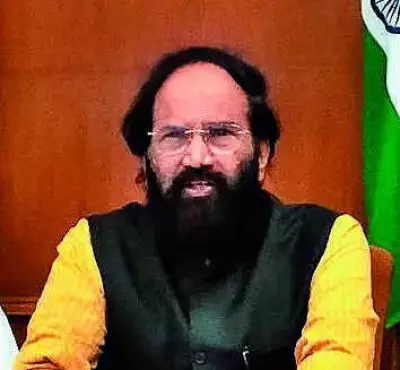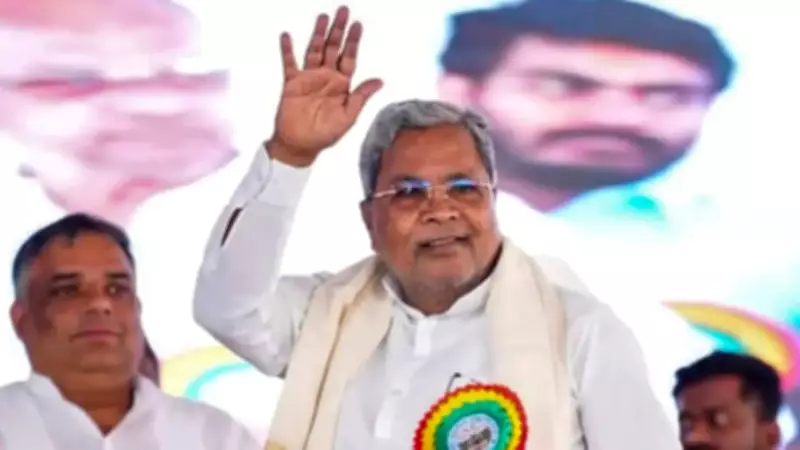
NEW DELHI: Karnataka Chief Minister Siddaramaiah tendered his resignation on Thursday, ending a months-long power struggle with his deputy DK Shivakumar. Two days after meeting the Congress high command in Delhi, Siddaramaiah submitted his resignation to the governor's secretary at Karnataka Bhavan.
After resigning, Siddaramaiah held a press conference, stating he stepped down within 48 hours as requested by the high command. "I have said and maintained that if the high command asks me to resign, I shall resign. Accordingly, the day before yesterday, the high command asked me to resign. I said I will resign in 48 hours. As a result, I have resigned," he said.
He added that the governor would consider his resignation after returning from a tour, expressing confidence it would be accepted as a constitutional action. "The procedure is left to him, but once a CM gives his resignation letter, then it has to be approved to make way for the new CM," Siddaramaiah noted.

What's Next for Siddaramaiah
For an amicable power transfer, the party high command offered Siddaramaiah a Rajya Sabha seat and a national role. According to party insiders, Rahul Gandhi asked Siddaramaiah to consider a new party role within a week. The possibility of shifting the 77-year-old leader to the Rajya Sabha gained momentum ahead of elections for four Upper House seats from Karnataka in June, with Congress confident of winning at least three.
On Thursday, Siddaramaiah confirmed the Rajya Sabha offer but said he "respectfully" declined it. "The high command offered me a Rajya Sabha seat, but I have declined it respectfully," he stated. "I have two more years as an MLA, and I will serve my people. I will continue in active politics. I have given my resignation on my own accord. But I am not retiring from politics and will continue to fight till my last breath against communal forces and for social justice."
The outgoing chief minister made clear that the decision on Karnataka's next CM rests with the Congress leadership and the Congress Legislature Party.
The Rise of a Congress Stalwart
Siddaramaiah leaves behind a legacy of welfare politics, backward class mobilisation, and legislative dominance that shaped Karnataka Congress for nearly two decades. He was the only OBC leader heading a Congress government in the country.
He presented a record 17 state budgets, including the one in February this year. On January 7, he became Karnataka's longest-serving CM, surpassing his political mentor D Devaraj Urs.
Born on August 12, 1948, in Siddaramanahundi village of Mysuru district, Siddaramaiah came from a poor farmer's family. He earned a BSc and later a law degree from Mysore University, briefly practising as an advocate before entering politics, inspired by socialist ideals of Ram Manohar Lohia.
His political journey began in the early 1980s as a taluk board member under the Janata movement. In 1983, he made his assembly debut from Chamundeshwari constituency on a Lok Dal ticket. During the Janata years, he became the first chairman of the Kannada Kavalu Samiti, formed under then chief minister Ramakrishna Hegde to oversee Kannada as the official language. He later served as Sericulture Minister.
For over two decades, Siddaramaiah remained rooted in the Janata Parivar, building a reputation as a staunch anti-Congress leader. His rise brought him close to H D Deve Gowda and the Janata Dal (Secular). After the fractured Karnataka verdict in 2004, the Congress and JD(S) formed a coalition government, and Siddaramaiah became deputy chief minister under Congress leader N Dharam Singh. However, he believed he lost an opportunity to become chief minister due to internal resistance within JD(S), particularly from Deve Gowda's camp.
The fallout deepened in 2005 as H D Kumaraswamy emerged as a rising force. Siddaramaiah responded by positioning himself as a backward class leader, championing AHINDA, a Kannada acronym for minorities, backward classes, and Dalits. This movement significantly expanded his political base across Karnataka.
His expulsion from JD(S) pushed him to a crossroads. Though he briefly considered "political sanyas" and returning to legal practice, he rejected forming a regional party due to lack of resources. In 2006, in an unthinkable move at the time, he joined the Indian National Congress with his supporters.

Within Congress, Siddaramaiah consolidated his position through persistence and mass appeal, realizing his ambition in 2013 when he became chief minister for the first time.
Tug of War with DK Shivakumar
After Congress lost power in 2018, Siddaramaiah remained a towering leader. In 2023, following Congress's return to power, he was again chosen as chief minister after a prolonged internal tussle with deputy leader D K Shivakumar. Together, they scripted the Congress victory in the 2023 Assembly elections. While Siddaramaiah's AHINDA plank countered the BJP's Lingayat-Brahmin voter base, Shivakumar managed the party's organisational machinery.
However, the rift between the two leaders was visible even during the campaign. They were rarely seen sharing a stage together. Only at the eleventh hour did Karnataka Congress president Shivakumar meet Siddaramaiah to present a united front. After the win, the high command struggled over the CM face, eventually choosing Siddaramaiah for his seniority and popularity. An agreement reportedly allowed DK Shivakumar to take over in the second half of the government.
After two-and-a-half years, the DKS camp pressured the high command to honour the agreement, leading to Siddaramaiah's resignation.