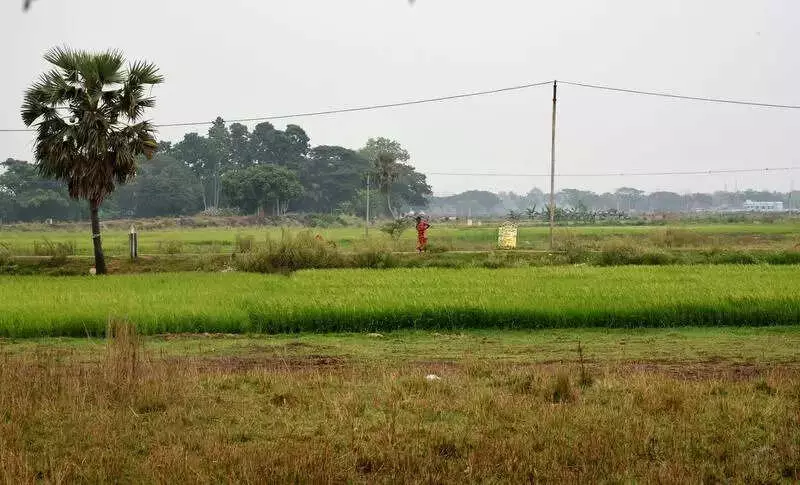
The contentious issue of land and consent has flared up again in Singur, West Bengal. This debate returned to the forefront on Friday, exactly twenty years after massive anti-land acquisition protests first put this region on the state's political map. The catalyst is a planned public rally by Prime Minister Narendra Modi scheduled for Sunday.
Political Protests and Farmer Divisions
Trinamool Congress MLA Karabi Manna, representing Haripal, staged a protest at the Singur police station. She strongly objected to the BJP's actions, accusing the party of forcibly taking land for the Prime Minister's meeting without obtaining proper consent from the owners.
However, the situation on the ground reveals a more complex picture. Bengal BJP leaders presented a different narrative. They stated that over 400 farmers have willingly given their consent for the use of their land for PM Modi's Sunday rally. Notably, many of these farmers were among those who had previously refused to give up their land for the Tata Singur car plant project years ago.

Allegations and Counterclaims
Manna's protest centered on the claim that the rally organizers did not secure consent from all farmers whose land might be used for the event. Two agitating farmers, Sukdeb Sahana and Dilip Samanta, supported this allegation. They stated that BJP leaders did not seek or receive any permission from them to organize the rally on the ground in question.
In response, Bengal BJP netas countered these claims. They asserted that the land belonging to the complaining farmers is situated far away from the actual rally site. This statement aims to downplay the controversy and suggest the objections are misplaced.
The renewed debate in Singur highlights the enduring sensitivity of land rights issues in Bengal. It underscores how political events can quickly revive old wounds and divisions within communities. The contrasting stories from different farmer groups and political parties show a clear split in local opinion, mirroring the broader political tensions in the state.