A political controversy has erupted in Uttar Pradesh after a Samajwadi Party Member of Parliament alleged he was deliberately excluded from an invitation to a flag-hoisting ceremony at the Ram Mandir in Ayodhya.
The Allegation of Exclusion
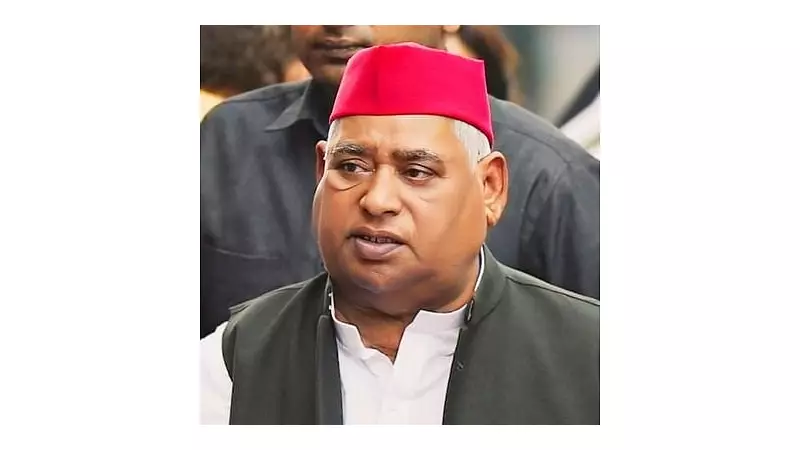
The MP, Shri Prasad, took to social media on November 25, 2025, to voice his grievance. He claimed that he was not invited to the event and explicitly stated that his "Dalit identity" was the primary reason for this omission. This public accusation immediately injected a potent social and political dimension into the situation, framing it as an issue of identity-based discrimination.
The BJP's Political Rebuttal
Responding swiftly to the serious allegation, the Bharatiya Janata Party (BJP) countered the claim. The party labeled the MP's charge as purely "political" in nature. In their statement, the BJP suggested that the accusation was a strategic move to politicize a religious and national event rather than a reflection of any factual oversight or intentional exclusion.
Wider Implications and Fallout
This incident has sparked a significant debate in the public sphere. It raises questions about the intersection of politics, religion, and social identity in contemporary India. The controversy surrounding the Ram Janmabhoomi site and the grand temple built there is historically sensitive, and this new dispute adds another layer of complexity. The exchange highlights the ongoing political tensions between the Samajwadi Party and the BJP in the crucial state of Uttar Pradesh, with both sides leveraging the situation to appeal to their respective voter bases.