

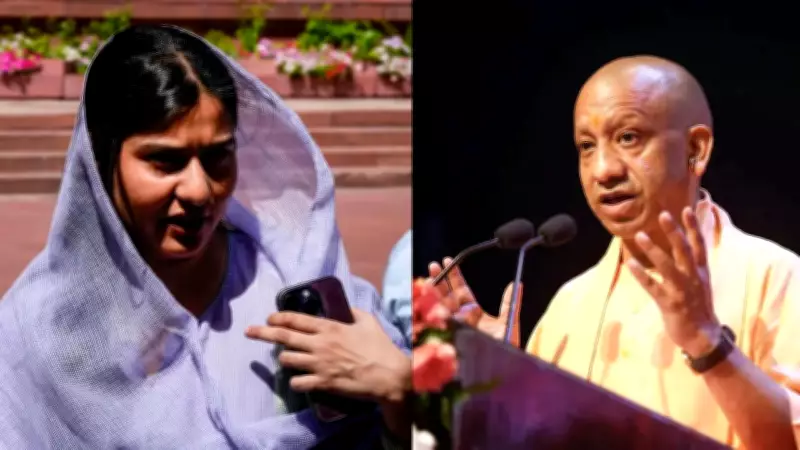
Samajwadi Party MP Iqra Hassan on Wednesday strongly criticized Uttar Pradesh Chief Minister Yogi Adityanath's remarks on banning namaz on public roads, asserting that the Constitution does not permit targeting any specific community. Speaking in response to the chief minister's statements, Hassan said, "As per the Constitution, he has no right to target any community. The roads belong to the society. Just like other festivals being celebrated on roads pose no objection to anyone, there should be no objection to namaz which is offered in just two minutes."
CM Yogi Adityanath's Defense of the Ban
Earlier, Chief Minister Yogi Adityanath defended his government's ban on offering namaz on public roads, emphasizing that prayers must be held only at designated places of worship. He suggested that if there is a space crunch, prayers should be offered in shifts instead of blocking public spaces. Speaking at an event organized by a news daily in Lucknow, Adityanath stated, "Roads are meant for commuters, patients, and working citizens, not for religious gatherings. The rule of law will prevail equally for everyone."
He further claimed, "People ask whether roadside prayers have stopped in Uttar Pradesh. I tell them to come and see for themselves. It simply does not happen anymore. We are not stopping anyone from offering prayers, but roads cannot be occupied for it."

Criticism of Previous Governments
The chief minister also took aim at previous state governments, accusing them of encouraging lawlessness, caste politics, and appeasement. He alleged that exam-copying mafias and criminal syndicates flourished under their rule, leading to an identity crisis in the state. Adityanath's remarks come amid ongoing debates about religious practices in public spaces and the enforcement of law and order in Uttar Pradesh.
Iqra Hassan's retort highlights the political divide over the issue, with the Samajwadi Party defending the right to offer namaz on roads as a matter of constitutional equality. The exchange underscores the tension between religious freedom and public order in the state.






