Telangana's Industries Minister, D Sridhar Babu, presented a robust defence of the state's new industrial land policy in the assembly on Tuesday, framing it as a critical measure to save Hyderabad from following the polluted path of cities like Delhi. He called upon opposition parties to set aside political differences and prioritize the welfare of future generations.
Policy Aims to Create a Cleaner Hyderabad
During a brief discussion, Minister Sridhar Babu outlined the core rationale behind the Hyderabad Industrial Lands Transformation Policy (HILTP). He expressed strong displeasure over what he termed as exaggerated concerns and misinformation being spread by opposition members regarding the policy's intent. The minister warned that unchecked industrial activity within city limits could lead to a scientific disaster, with rising pollution severely impacting residential areas.
He emphasized that development must not come at the cost of environmental health. HILTP, he argued, is a foundational step towards sustainable growth. The minister cited historical examples, noting that industrial zones established on Hyderabad's outskirts in the 1970s, such as Balanagar and Uppal, were later surrounded by residential colonies. This erosion of the buffer zone has led to toxic emissions, groundwater contamination by heavy metals, and associated serious health risks for citizens.

Addressing Misinformation and Ground Realities
Sridhar Babu directly accused leaders of the Bharat Rashtra Samithi (BRS) and the Bharatiya Janata Party (BJP) of spreading false narratives about government land sales even before the policy's formal announcement. Countering these claims, he stated that BRS leaders during field visits were informed by industry owners themselves that the policy was formulated at their request.
He detailed that the HILTP was crafted by a cabinet sub-committee after extensive consultations with experts and an assessment of ground realities. The minister clarified key aspects:
- The land proposed for conversion is owned by industries, not the government.
- The conversion fee was decided after due consultations.
- The process is entirely voluntary and time-bound, requiring applications via the TG-iPASS portal within six months.
The primary aim of the policy is to relocate polluting industries beyond the Outer Ring Road (ORR) and to revive unused industrial land parcels while curbing pollution from outdated technologies.
Historical Failures and Upcoming Scrutiny
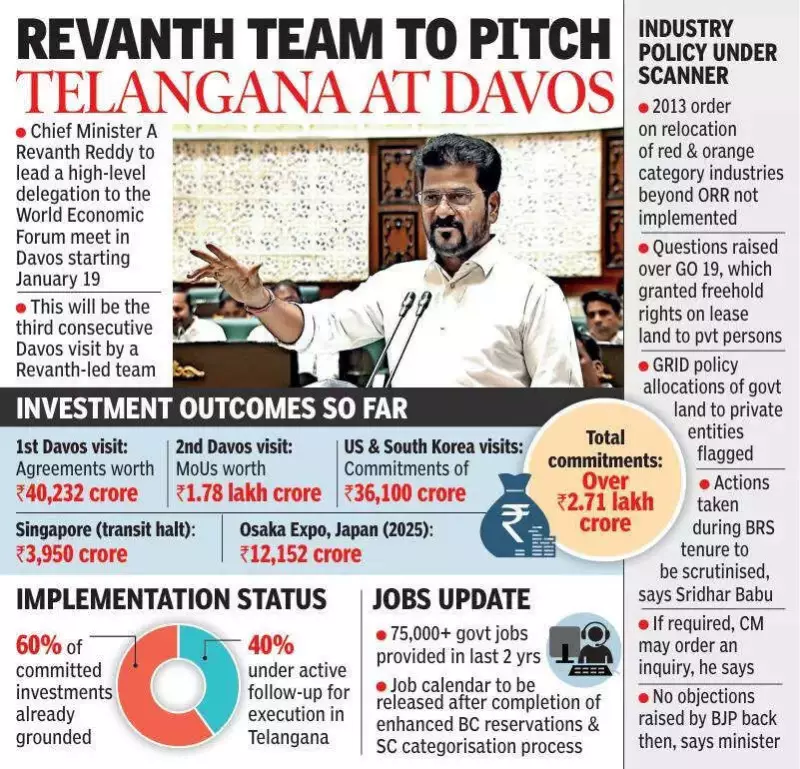
The minister pointed out that a 2013 government order had already mandated the relocation of red and orange category industries beyond the ORR, a directive which the previous BRS government failed to implement. He also raised questions about the intent behind GO 19, which granted freehold rights on lease lands to private individuals.
Furthermore, he referenced the GRID policy of the past administration, under which government land parcels were allotted to private entities—a move he claimed BJP leaders did not oppose at the time. Minister Sridhar Babu issued a stern warning, stating, "All these allocations and steps taken by the BRS tenure will be scrutinized. If needed, Chief Minister A Revanth Reddy will order an inquiry."
By invoking the MC Mehta versus Union of India case, the minister reinforced the principle that the constitutional right to life must take precedence over unchecked industrialization. The HILT Policy is positioned as Telangana's proactive strategy to ensure Hyderabad's development is both economically vibrant and environmentally responsible.