

Finance ministers from opposition-ruled states Punjab and Telangana made a strong plea for additional financial assistance from the central government during a crucial pre-Budget consultation on Saturday. Their primary contention was against the recently passed Viksit Bharat Guarantee for Rozgar and Ajeevika Mission (Gramin), or VB-G RAM G, which they argue imposes a heavier fiscal burden on states due to an altered funding formula.
States Decry Shift in Rural Employment Funding
The demands were put forth at a meeting chaired by Union Finance Minister Nirmala Sitharaman, attended by finance ministers of states and Union Territories. The gathering also included the Governor of Manipur, chief ministers of Delhi, Goa, Haryana, Jammu and Kashmir, Meghalaya, and Sikkim, along with deputy chief ministers from several states.
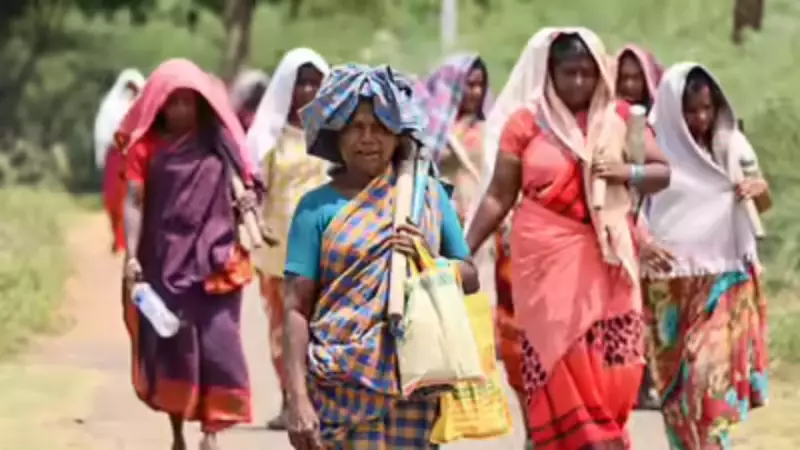
The core of the dispute lies in the VB-G RAM G Act, passed by Parliament last month, which replaces the long-standing Mahatma Gandhi National Rural Employment Guarantee Act (MGNREGA). The new law changes the cost-sharing model from a 90:10 ratio (Centre:State) to 60:40. States argue this fundamental shift weakens the employment guarantee framework and violates the spirit of cooperative federalism.

Punjab and Telangana Voice Strong Objections
Punjab Finance Minister Harpal Singh Cheema led the charge, stating the new framework dilutes the employment guarantee while transferring a significant financial load to states. He called for a return to the original demand-driven structure and the old funding pattern of MGNREGA.
Echoing these concerns, Telangana Finance Minister Mallu Bhatti Vikramarka highlighted that the Union government enacted the VB-G RAM G without adequate consultation with states. He warned that the revised funding ratio would strain state finances further. A critical point raised was that any extra man-days beyond the normative allocation would now be the states' sole responsibility, creating a serious hurdle in providing demand-based work.
"This is entirely against the spirit of cooperative federalism and starving them of funds for capital outlay, which is essential for maintaining growth momentum," Vikramarka asserted.
Broader Fiscal Demands and GST Concerns
Beyond the employment scheme, both states presented additional fiscal requests. Punjab sought a special fiscal package, citing the twin challenges of border tensions and floods in 2025. On the Goods and Services Tax (GST) front, Punjab pointed to an annual revenue loss of nearly Rs 6,000 crore following GST 2.0 reforms and pressed for a predictable stabilisation mechanism.
Telangana's finance minister proposed that surcharges on income and corporation tax be directed to a non-lapsable infrastructure fund for state grants or merged with basic tax rates to enlarge the divisible pool. He also expressed caution about GST 2.0, acknowledging its potential to boost demand but questioning its sustainability if rate cuts lead to revenue shortfalls, for which he sought a compensation mechanism.
The pre-Budget meeting has set the stage for continued negotiations between the Centre and states, highlighting the ongoing tension over fiscal autonomy and shared responsibilities in key welfare schemes.






