

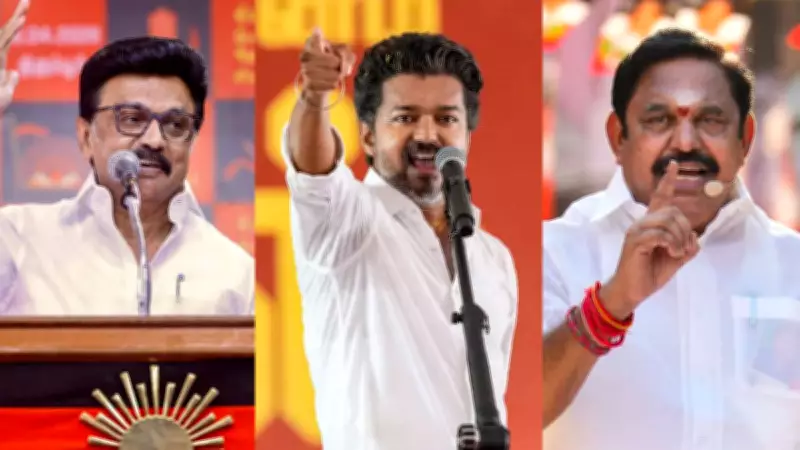
Tamil Nadu 2026 Assembly Elections: A Pivotal Democratic Exercise
The Tamil Nadu Assembly elections in 2026 unfolded as a crucial political event, drawing widespread attention across the state and beyond. On April 23, voters turned out in substantial numbers, reflecting the high stakes involved in this electoral battle. The contest featured major political players, including the Dravida Munnetra Kazhagam (DMK), All India Anna Dravida Munnetra Kazhagam (AIADMK), Tamil Manila Congress (TVK), Bharatiya Janata Party (BJP), and Indian National Congress, each vying for dominance in the state's legislative body.
Voter Turnout and Electoral Dynamics
Early reports from polling stations indicated a robust voter participation rate, with citizens from urban and rural areas alike exercising their franchise. The voting percentage, a key metric of democratic engagement, was closely monitored by election officials and political analysts. This turnout is seen as a barometer of public sentiment towards the incumbent government led by Chief Minister M.K. Stalin of the DMK and the opposition alliances spearheaded by figures like Vijay Palaniswamy of the AIADMK.
The electoral process was marked by intense campaigning, with parties focusing on issues such as governance, economic development, and social welfare. The BJP and Congress, as national parties, sought to expand their foothold in Tamil Nadu, while regional entities like the TVK aimed to carve out a niche in the political landscape.

Key Parties and Their Strategies
DMK: Under the leadership of M.K. Stalin, the DMK campaigned on its record of administrative reforms and welfare schemes, seeking to retain power amid challenges from rival factions.
AIADMK: Led by Vijay Palaniswamy, the AIADMK positioned itself as a viable alternative, criticizing the DMK's policies and promising enhanced development initiatives.
TVK: The Tamil Manila Congress, though a smaller player, focused on regional issues and aimed to attract voters disillusioned with the major parties.
BJP and Congress: These national parties leveraged their organizational strengths and alliances to influence the electoral outcome, with the BJP emphasizing national integration and the Congress highlighting its historical ties to Tamil Nadu.
Implications and Future Outlook
The results of the 2026 Assembly elections will shape Tamil Nadu's political trajectory for the coming years. A high voter turnout suggests an engaged electorate, potentially leading to a mandate that could influence policy directions on both state and national levels. As vote counting proceeds, all eyes are on the final tally to determine which party or coalition will form the next government.
This election underscores the vibrant democratic culture in Tamil Nadu, where diverse political ideologies converge in a competitive yet peaceful manner. The outcome is expected to have ripple effects on India's broader political landscape, particularly in southern states.






