

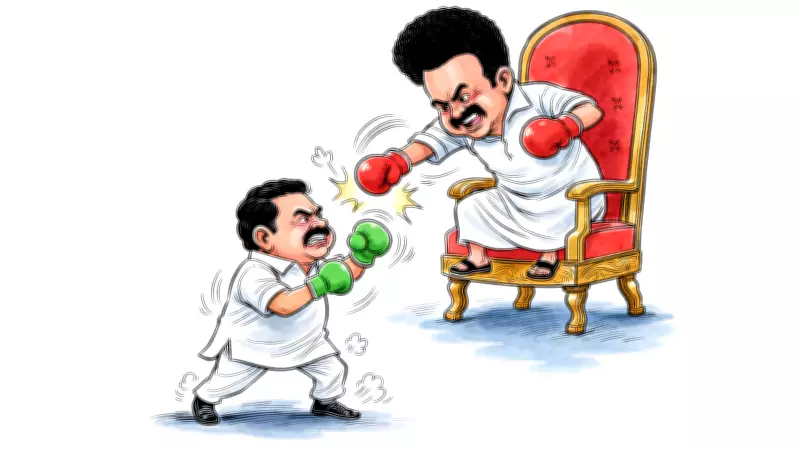
Tamil Nadu Election: Can Stalin Achieve What Karunanidhi Could Not?
In the absence of any last-minute surprises, the upcoming assembly elections in Tamil Nadu are poised to be a gripping three-cornered contest. The political battleground will feature the DMK-led front, an NDA coalition anchored by the AIADMK, and the emerging force of actor Vijay's Tamilaga Vettri Kazhagam (TVK). Adding another layer of complexity, the Tamil nationalist Naam Tamilar Katchi (NTK), led by Seeman, stands as a fourth significant group capable of playing spoilsport for any of the other three major contenders.
The Dominant Questions Shaping the Pre-Poll Scenario
Two critical questions are dominating the political discourse as the election approaches. First and foremost, can Chief Minister M.K. Stalin secure a second consecutive term in office? This achievement would mark a historic milestone, as his father and former Chief Minister M. Karunanidhi never managed to win back-to-back terms. In contrast, political stalwarts like M.G. Ramachandran and J. Jayalalithaa successfully accomplished this feat during their tenures.
The second pivotal question revolves around the electoral impact of actor Vijay's newly formed party, TVK. Political analysts and voters alike are keenly observing how many votes and seats this fledgling political entity will capture. Its performance could significantly influence the overall outcome and potentially reshape Tamil Nadu's political landscape.

The Stakes and Historical Context
The DMK, under Stalin's leadership, is striving to break a historical pattern. While the party has enjoyed considerable success over the decades, securing consecutive terms has remained an elusive goal. Karunanidhi, despite his long and influential political career, faced alternating victories and defeats, never achieving the continuity that MGR and Jayalalithaa managed during their respective eras.
This election is not merely about political survival but about legacy and historical precedent. A victory for Stalin would not only reinforce the DMK's current governance but also etch his name alongside the few who have accomplished this challenging political feat in Tamil Nadu.
The Multi-Cornered Contest and Its Implications
The three-way contest introduces a dynamic and unpredictable element to the election. The DMK-led front must contend with the traditional rivalry of the AIADMK-led NDA coalition while simultaneously addressing the new challenge posed by Vijay's TVK. The NTK's presence further complicates matters, as its strong ideological stance could siphon votes from various segments, affecting the fortunes of all major players.
As the campaign intensifies, all eyes are on whether Stalin can navigate this complex political terrain and achieve what his father never could, while also gauging the disruptive potential of new entrants like TVK and NTK. The results will undoubtedly have lasting implications for Tamil Nadu's political future.






