

Tamil Nadu Elections 2026: The Major Contenders in a Pivotal Political Showdown
With the Tamil Nadu Assembly elections of 2026 approaching, the political arena is heating up with intense competition among established leaders and new entrants. This high-stakes contest will determine the state's governance direction for the next five years, featuring a complex web of alliances and rivalries.
Incumbent Leadership and Opposition Challenges
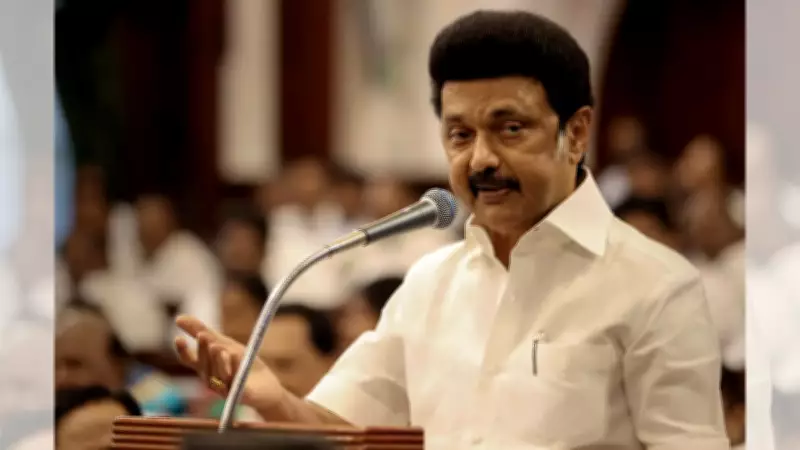
MK Stalin, the incumbent Chief Minister from the Dravida Munnetra Kazhagam (DMK), leads the Secular Progressive Alliance with a firm focus on social justice principles and federalism. Campaigning on the success of welfare initiatives like free breakfast programs for students and monthly financial assistance for women, Stalin aims to secure a second consecutive term for his administration. His position as the central figure in Tamil Nadu's current political landscape remains unchallenged within his alliance.
Edappadi K. Palaniswami (EPS), the Leader of the Opposition from the All India Anna Dravida Munnetra Kazhagam (AIADMK), has successfully consolidated his party by reuniting with former rivals including TTV Dhinakaran. Positioned as the primary challenger to the DMK government, EPS is leveraging a broad coalition that includes the Bharatiya Janata Party (BJP) and the Pattali Makkal Katchi (PMK) to capitalize on potential anti-incumbency sentiments and regain traditional party strongholds across the state.

New Political Entrants and Disruptive Forces
In what many consider the most anticipated political debut of 2026, superstar Vijay leads the Tamilaga Vettri Kazhagam (TVK) as a direct alternative to the established Dravidian political giants. Targeting younger voters and those disillusioned with traditional politics, his independent stance and massive fan following create a significant X-factor that could potentially disrupt decades-old voting patterns, particularly in urban centers throughout Tamil Nadu.
Udhayanidhi Stalin, serving as Deputy Chief Minister, has transitioned from being a prominent campaigner to a core strategist within the DMK. As the face of the party's youth outreach initiatives, he aggressively counters opposition narratives while his performance in this election is widely viewed as a crucial test of his leadership capabilities and the future trajectory of the party's political legacy.
National Party Ambitions and Regional Power Brokers
The Bharatiya Janata Party's most ambitious push in Tamil Nadu is driven by K. Annamalai's fiery oratory and Nainar Nagendran's substantial local influence. Now firmly positioned within the AIADMK alliance, they provide what they term a nationalist "third dimension" to the campaign, focusing on anti-corruption platforms and central government schemes to expand the saffron party's footprint in southern India.
Seeman, leader of the Naam Tamilar Katchi (NTK), remains a consistent political force contesting all 234 assembly seats independently. As a champion of Tamil nationalism, his rhetoric appeals to a dedicated segment of voters seeking a complete break from both national parties and the established Dravidian political duopoly that has dominated state politics for generations.
Influential Alliance Partners and Community Leaders
Anbumani Ramadoss of the Pattali Makkal Katchi (PMK), a former Union minister often described as a potential kingmaker, has strengthened the opposition by aligning with the AIADMK. His leadership of the Vanniyar-based party proves essential for any alliance seeking to achieve a majority in the 2026 legislative assembly, particularly in northern districts where his influence remains substantial.
Thol. Thirumavalavan of the Viduthalai Chiruthaigal Katchi (VCK) serves as the most prominent voice for Dalit rights in Tamil Nadu and forms a bedrock of the DMK alliance. His ability to consolidate marginalized communities and minority voters provides both ideological and numerical strength that anchors the Secular Progressive Alliance's electoral prospects.

Legacy Custodians and Strategic Influencers
Though operating on different political tracks for the 2026 elections, TTV Dhinakaran and VK Sasikala remain custodians of what many describe as the "Jayalalithaa legacy." Sasikala recently launched her own political outfit, the All India Puratchi Thalaivi Makkal Munnetra Kazhagam (AIPTMMK), to reclaim her political space, while Dhinakaran has moved his Amma Makkal Munnetra Kazhagam (AMMK) into the National Democratic Alliance (NDA) fold. Together, they command significant influence over the Mukkulathor vote bank in southern districts, posing a strategic challenge to mainstream AIADMK leadership.
National Party Representation and Celebrity Support
Representing the Indian National Congress, K. Selvaperunthagai finalized a 28-seat arrangement within the DMK alliance framework. With strategic backing from veteran politician P. Chidambaram, the Congress seeks to demonstrate it remains an indispensable partner in what they frame as the fight for secularism and state rights within the Indian federal structure.
The "celebrity support" block within the DMK alliance features Premallatha Vijayakant of the Desiya Murpokku Dravida Kazhagam (DMDK) and Kamal Haasan of the Makkal Needhi Maiam (MNM). Premallatha brings the DMDK's rural grassroots legacy to the table, while Kamal Haasan's MNM contributes urban-intellectual appeal, together strengthening the incumbent government's outreach across diverse demographic layers throughout Tamil Nadu.
As campaigning intensifies toward the 2026 polling dates, these political figures will navigate complex caste equations, regional loyalties, and development promises in what promises to be one of India's most closely watched state elections.





