

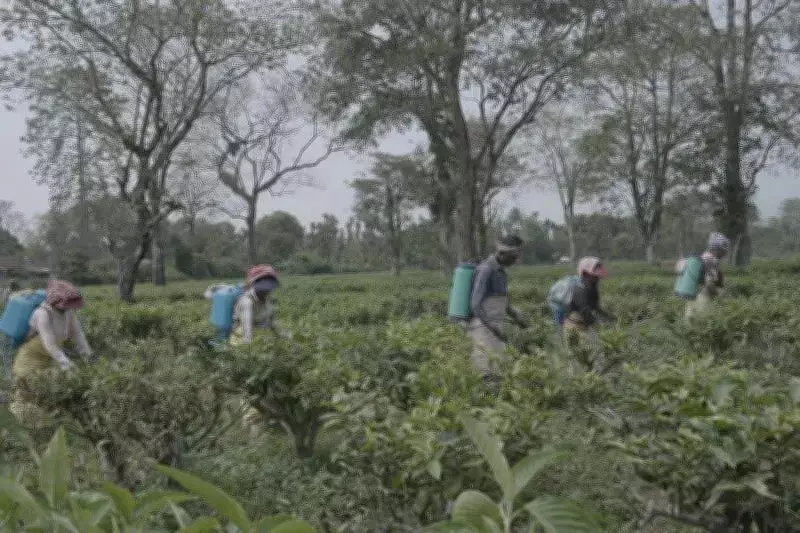
North Bengal Tea Workers Cast Votes Amidst Deepening Crisis
As tea garden workers across north Bengal make their way to polling booths on Thursday, they carry heavy burdens of unpaid dues, shattered assurances, and a growing sense of uncertainty. For generations, these laborers have placed their trust in political pledges, only to see little change in their dire circumstances.
Broken Promises and Unpaid Wages
Rakhi Barai, a worker at Joybirpara Tea Estate, expresses widespread disillusionment: "I don't believe any party any more. They come before elections and make all sorts of promises. For generations, we have believed them, but our situation has not changed." Rakhi reveals she has not received her daily wage, known as 'talab', for three months, a plight echoed by many in the region.
The situation is alarmingly similar across numerous estates in the Dooars, including Joybirpara, Dheklapara, Kathaguri, Dalmore, and Bundapani. Officially, tea workers earn Rs 250 per day, but payments are erratic, and employment is no longer guaranteed. With several gardens lying unproductive or operating only partially, workers often wait for hours only to return home without work or pay.

Migration and Collapsing Infrastructure
In many tea garden families, migration has become the sole viable option. Younger members are increasingly leaving for Kerala or the National Capital Region in search of employment, abandoning the estates that once promised stability.
Built on a plantation system dating back to colonial rule, tea estates were designed to provide not just jobs but also housing, healthcare, and other welfare support. Hari Chetri, a worker at Dheklapara Tea Estate, describes the decay: "Estate hospitals are mostly shut now, labourer quarters are in ruins, and even basic supplies like firewood are often unavailable."
Industry Struggles and Climate Stress
West Bengal boasts over 300 tea estates employing more than three lakh workers, yet the sector has grappled for years with low auction prices, rising operational costs, and repeated closures. Climate stress has exacerbated these challenges, with erratic rainfall patterns, rising temperatures, and increased pest attacks taking a toll on productivity.
PK Bhattacharjee of the Tea Association of India notes: "The industry is assailed by multiple factors." In response, the state government has attempted to diversify income by allowing up to 30% of tea estate land to be used for tourism and commercial purposes, such as hotels, wellness centers, and eco-tourism projects.
Limited Relief and Political Pledges
On the ground, however, workers report minimal improvement. Bindu Oran, a tea worker, criticizes the lack of transparency: "The new management is not transparent. Ownership changes have brought uncertainty, not stability." Even government schemes like Lakshmir Bhandar have provided only limited relief to the struggling workforce.
As the 2026 elections approach, political parties have once again reached out to tea workers with promises of higher wages and better living conditions. Both the Trinamool Congress and the BJP have pledged to raise daily wages to Rs 300. Yet, workers show little sign of renewed faith, viewing these assurances with skepticism borne of past disappointments.
In the gardens of north Bengal, voting unfolds not as a moment of optimism but against a backdrop of fatigue, distrust, and a daily struggle to endure. The electoral process highlights the deep-seated issues plaguing this vital industry and its dedicated laborers.






