

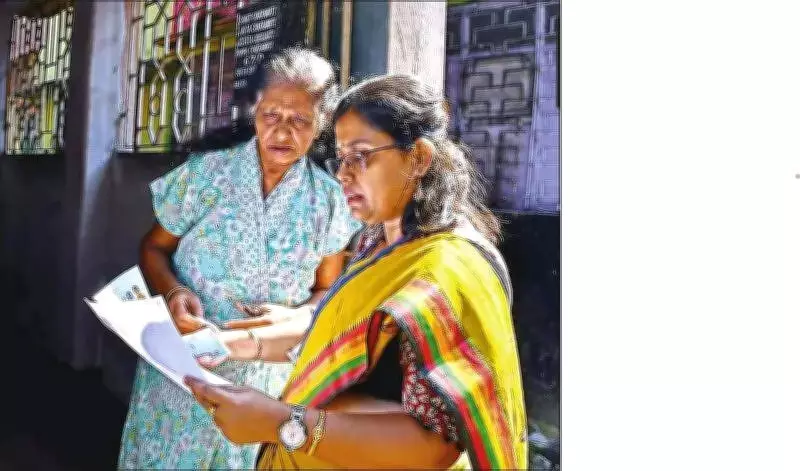
Telangana's Comprehensive Caste Survey Reveals Stark Backwardness Disparities
An Independent Expert Working Group (IEWG), tasked with analyzing the Socio-Economic, Educational, Employment, Political and Caste (SEEEPC) Survey 2024, has delivered a groundbreaking report highlighting significant backwardness across Telangana's caste groups. The analysis reveals that 135 out of 242 castes in the state are considered more backward than the average caste, based on their composite backwardness index (CBI) score exceeding 81.
Demographic Breakdown of Backward Castes
These 135 castes collectively account for a substantial 67% of Telangana's population. The breakdown within this group includes 69 Backward Classes (BCs), 41 Scheduled Castes (SCs), and 25 Scheduled Tribes (STs). The Telangana government, which released the caste-wise population data alongside this report, has provided unprecedented transparency into the social composition of the state.
Methodology: The Composite Backwardness Index
To systematically assess the socio-economic status of all castes, the working group developed the Composite Backwardness Index (CBI). This innovative metric utilizes 42 carefully selected parameters of sociological and statistical importance, offering a quantitative framework to measure relative backwardness across different caste groups. The SEEEPC survey itself was conducted from November 2024 to February 2025, with the analysis led by former Supreme Court judge B Sudarshan Reddy.

Welfare Scheme Utilization Patterns
The report provides detailed insights into how different social groups benefit from 11 major government welfare schemes, including Rythu Bharosa, free bus travel, and free power. A key finding is the uneven distribution of benefits relative to population shares.
Scheduled Castes (SCs), who have the highest CBI score of 96, show concerning under-representation in certain schemes. For instance, while SCs constitute 18.2% of the population among the 135 most backward castes, they receive only 14% of Rythu Bharosa benefits. The report suggests this disparity likely stems from lower land ownership patterns within SC communities. However, SCs do benefit more from schemes like free housing and free bus travel for women, indicating some targeted welfare access.
Scheduled Tribes (STs), with a CBI score of 95, generally benefit significantly more across most schemes, particularly in agricultural support programs like Rythu Bharosa, Rythu Bhima, free power for agriculture, and government housing schemes. This reflects their high economic vulnerability and dependence on agricultural and state support. The exception is Cheyutha pensions, where STs benefit less compared to their population share.
Backward Classes (BCs), scoring 86 on the CBI, exhibit mixed patterns. They benefit more from Cheyutha pensions and Kalyana Lakshmi but are slightly under-represented in critical agricultural schemes like Rythu Bharosa and free electricity for agriculture, suggesting possible gaps in agricultural asset ownership within this diverse group.
General Castes (OCs), with the lowest CBI score of 31, have the smallest share of beneficiaries in almost all welfare schemes. The exceptions are Rythu Bharosa and free power for agriculture, where their historical landholding advantage provides greater access.
Internal Disparities Within Social Groups
The working group made a crucial observation that significant variations exist even within broader social categories. The report identifies castes within BCs, SCs, and STs that are better off than other castes in the same social groups, highlighting the complexity of backwardness that extends beyond traditional classifications.
Detailed Population Statistics
The government's earlier population breakdown provides context for these findings. Of Telangana's 3.54 crore population:

- Scheduled Castes (SCs) constitute 61,84,319 people (17.43%)
- Scheduled Tribes (STs) number 37,05,929 (17%)
- Backward Classes (excluding Muslim minority) total 1,64,09,179 (46.25%)
- Muslim minority within BC groups are 35,76,588 (approximately 10%)
- General category Muslims number 8,80,424 (about 2.48%)
This means the total Muslim minority population stands at 12.56%, while the overall Other Caste (OC) population is 47,21,115, constituting approximately 13.31% of Telangana's residents.
The comprehensive SEEEPC survey and subsequent analysis represent a significant step toward evidence-based policy making in Telangana, providing detailed insights into caste-based socio-economic disparities that could inform future welfare initiatives and social justice measures.





