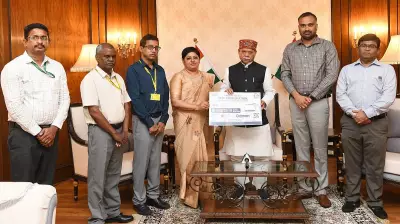
The Professor Jayashankar Telangana Agricultural University (PJTSAU) has submitted a policy paper to the state government, recommending a comprehensive five-year, phase-wise strategy for crop diversification. The plan, titled 'De-risking: A Framework for Transforming Telangana Agriculture for the Next Decade,' proposes a direct benefit transfer (DBT) of Rs 8,000 per acre to farmers who shift from paddy to approved non-rice crops in designated areas. This financial incentive is intended to mitigate income risks during the transition and encourage the adoption of diversified cropping systems.
Key Recommendations and Alternatives
The recommendations were prepared by university Vice Chancellor Aldas Janaiah and Professor of Practice Samrendu Mohanty. They are expected to be presented at the upcoming cabinet meeting. University officials stated, 'This independent framework allows the government to make its own decision.' The policy suggests red gram, soybean, green gram, black gram, jowar, bajra, and Bengal gram as viable alternatives to paddy.
Strengthening Farmer Institutions
The strategy also emphasizes strengthening farmer producer organisations (FPOs), farmer producer companies (FPCs), and self-help groups (SHGs). These institutions are expected to improve farmers' access to local and urban markets for non-rice crops while supporting small-scale value addition. Officials say the combined approach is designed to compensate farmers in the short term and build sustainable market systems in the long term. The policy targets diversification of 25 lakh acres currently under rice cultivation within five years.

Phased Implementation Plan
Implementation will follow a phased rollout aligned with market readiness and institutional capacity. In the first year, the government plans to pilot the programme in select districts, covering 5 to 10 lakh acres. In the second year, it will expand to high-potential clusters, targeting around 10 lakh acres. The third year will mark the scaling phase, covering 10 to 20 lakh acres. In the fourth year, the consolidation phase will aim for 20 lakh acres. By the fifth year, the programme is expected to reach 25 lakh acres under full rollout and stabilisation. Officials said the staggered expansion is intended to enable iterative learning, institutional strengthening, and gradual market adjustment as the diversification programme advances across regions.
Rising Paddy Dominance
The policy paper also highlights the growing dominance of paddy cultivation in Telangana in recent years. Between 2016-17 and 2024-25, rice acreage in the state nearly tripled, increasing from 4.16 million acres to 11.88 million acres. During the same period, the share of rice in the gross cropped area rose from 32% to 60%. Notably, the increase in rice acreage (7.7 million acres) surpassed the total expansion in gross cropped area (6.9 million acres). In other words, the entire increase in cultivated area over the past decade has been dedicated to rice, with an additional 8,00,000 acres shifting from other crops, particularly pulses and oilseeds, to rice cultivation.