Telangana's Agricultural Crossroads: Balancing Rural Dependence with Urban Expansion
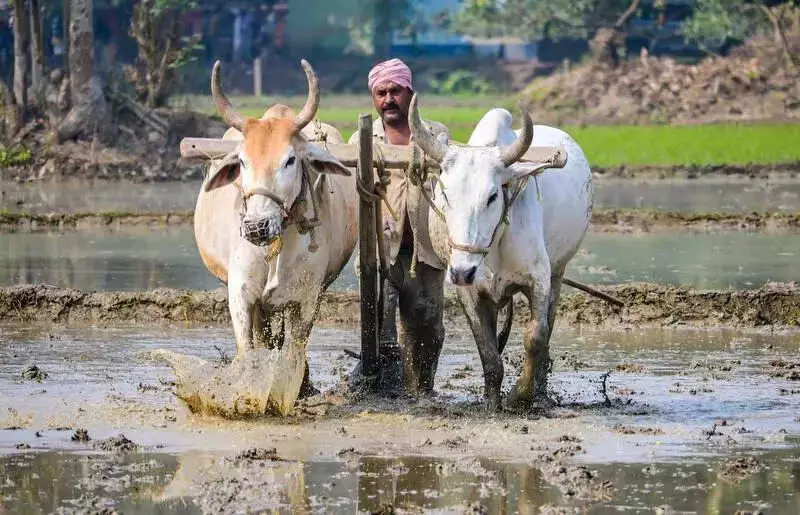
As Telangana strategically plans its long-term development trajectory, the agricultural sector has emerged as one of the state's most intricate and urgent challenges. Current projections paint a revealing picture: even by the year 2047, approximately 52% of Telangana's population will continue to rely on farming for their livelihoods. This persistent rural dependence creates a striking contrast with the simultaneous urban concentration, as nearly 50% of people are expected to reside in the rapidly expanding Hyderabad metropolitan region.
The Urban-Rural Divide: A Looming Sustainability Challenge
This sharp divergence between urban concentration and rural agricultural dependence establishes a complex scenario for the coming decade. With nearly 20 million people still depending on farming for their livelihood, the state faces significant planning challenges. Currently, about 55% of Telangana's population is directly engaged in agricultural activities, while Hyderabad's urban footprint continues to expand at an accelerated pace.
Projections indicate that by 2047, approximately 45% of Telangana's population will be concentrated in the Hyderabad metropolitan region. This presents a serious sustainability concern, as Hyderabad accounts for barely 2-3% of the state's total land area. The concentration raises critical questions about:

- Resource distribution and allocation
- Long-term food security planning
- Balanced regional development
- Infrastructure and service delivery
The Ageing Farmer Crisis and Economic Viability
A central concern revolves around whether farming can maintain economic viability and social sustainability in the coming decades. The average age of farmers in Telangana currently stands at around 50 years, and if current trends continue unabated, this could rise to approximately 70 years by 2047. This ageing agricultural workforce highlights the urgent necessity for structural reforms to make farming attractive to younger generations.
G Ramajaneyulu, Director of the Centre for Sustainable Agriculture, has identified three major challenges confronting the sector if 50-52% of the population continues to depend on farming by 2047. He revealed that the current average monthly income of farmers represents only about 30% of the lowest salary earned by state government employees, roughly equivalent to Rs 18,000.
If existing economic patterns persist, farm incomes could potentially decline further to just 20% of the lowest government salary by 2047. This alarming projection would translate to monthly earnings of only Rs 8,000 to Rs 10,000 for most farmers, particularly considering that the majority own no more than one hectare of land.
Pathways to Agricultural Transformation
"In such a challenging scenario, it becomes absolutely imperative that we inspire the younger generation to embrace farming as a viable and rewarding profession," Ramajaneyulu emphasized during his analysis. He stressed that improving farm incomes cannot be achieved through mere adjustments to crop patterns alone.
Instead, sustainable profitability must emerge from diversifying into allied agricultural sectors, including:
- Animal husbandry and livestock management
- Dairy farming and milk production
- Agro-processing and value addition
- Organic and specialty crop cultivation
These diversified approaches can provide crucial supplementary income and greater economic stability for farming households across Telangana.
Landholding Constraints and Policy Interventions
Landholding size remains another critical constraint affecting agricultural viability. With farmers owning an average of just one hectare of land, many are compelled to lease additional agricultural land to maintain economic viability. "Making tenancy laws more defined and favourable to farmers represents one major area requiring policy correction," Ramajaneyulu stated.

The contrast becomes particularly stark when compared with developed economies, where typically only 5-10% of the population depends on agriculture. This comparison highlights the substantial scale of economic transition that Telangana still needs to navigate in the coming decades.
Workshop Focus: Charting Telangana's Agricultural Future
These multifaceted concerns will form the central focus of discussions at the upcoming 'Telangana Agriculture Futures' workshop, being organized by the Telangana Rythu Commission. The workshop aims to address the structural reforms necessary to ensure that Telangana's agriculture remains productive, profitable, and socially relevant in the decades leading up to 2047.
Together, these challenges underscore the comprehensive transformation required across multiple dimensions—economic, social, and policy-related—if Telangana's agricultural sector is to thrive while supporting both rural communities and the state's broader development objectives.