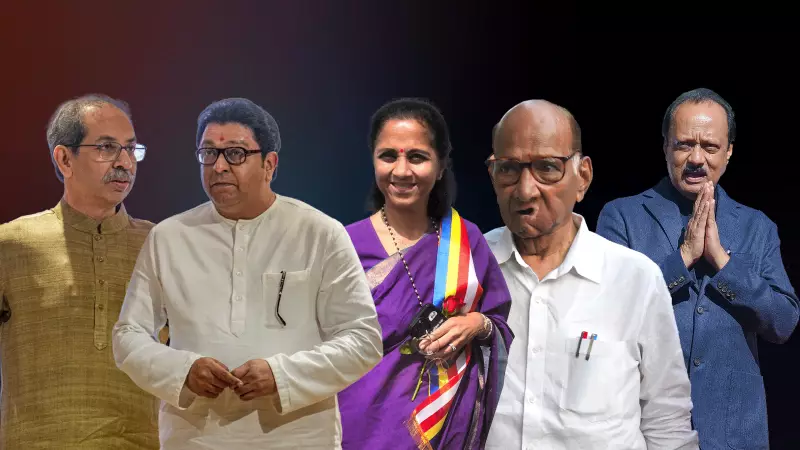
In a dramatic shift that is set to reshape the political landscape of Maharashtra, two powerful cousins from the state's most prominent political family have decided to set aside a bitter, decades-long feud. Raj Thackeray and Uddhav Thackeray, who were once seen as irreconcilable rivals, have officially announced an electoral alliance ahead of crucial civic polls in Mumbai.
A Rivalry Buried, A Legacy Invoked
The reconciliation marks the end of a political cold war that lasted for over two decades, splitting the base built by the late Shiv Sena founder Bal Thackeray. The announcement, made on January 10, 2026, strategically invokes shared Marathi identity and the enduring legacy of their patriarch, Bal Thackeray. This move underscores how Maharashtra's political dynasties are rediscovering the potent utility of blood ties and shared history when facing electoral battles.
The Strategic Calculus Behind the Pact
The primary immediate goal of this alliance is the upcoming civic polls in Mumbai. By joining forces, the Thackeray cousins aim to consolidate the Marathi vote bank and present a united front against other major political players. The rivalry, which began after Bal Thackeray's death, saw Raj Thackeray break away to form the Maharashtra Navnirman Sena (MNS), while Uddhav Thackeray led the Shiv Sena. Their separate paths often led to a division of votes, weakening their collective political influence.

Key factors driving this reunion include:
- The need to counter common political adversaries in the state.
- A desire to reclaim and solidify the core ideological ground of Marathi pride and identity politics.
- The practical electoral mathematics of uniting their respective voter bases for the critical urban local body elections.
Implications for Maharashtra's Political Future
This unexpected alliance sends shockwaves through Maharashtra's political arena. It potentially alters the equations for all major parties, including the Bharatiya Janata Party (BJP), the Nationalist Congress Party (NCP), and the Congress. The reunification of the Thackeray factions could lead to a significant re-polarization of votes in Mumbai and other parts of the state.
The move demonstrates that in Indian politics, especially within familial political structures, long-standing enmities can be set aside when strategic survival and electoral gain are at stake. The focus on Bal Thackeray's legacy is a clear attempt to emotionally reconnect with their traditional support base and frame this alliance as a homecoming rather than merely a political merger.
As the state gears up for a series of elections, all eyes will be on this revived partnership to see if it can translate familial reconciliation into tangible electoral success and redefine power dynamics in India's financial capital.