Thackeray Alliance Holds Ground in Mumbai's Direct Electoral Battles
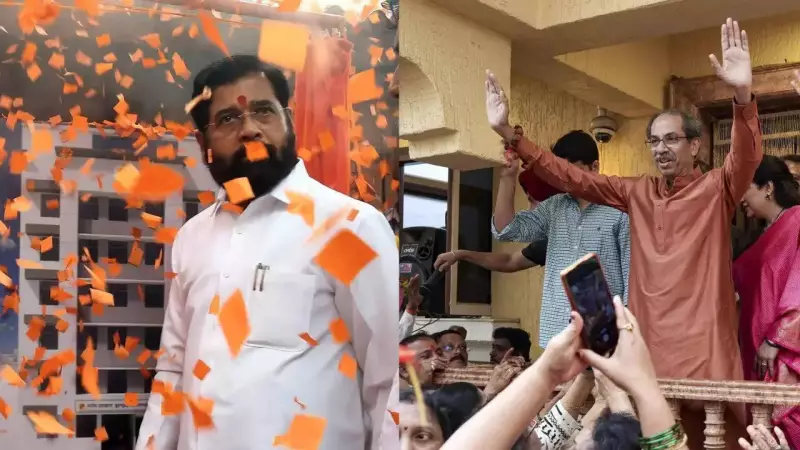
Mumbai witnessed a fierce political showdown in the recent Brihanmumbai Municipal Corporation (BMC) elections. In fifty-two electoral wards across the city, a direct contest unfolded between Eknath Shinde's Shiv Sena and the combined force of Shiv Sena (UBT) and the Maharashtra Navnirman Sena (MNS). The results delivered a clear advantage to the Thackeray cousins' alliance.
The Uddhav Thackeray-led Shiv Sena (UBT) and MNS combine emerged victorious in thirty-six of these head-to-head fights. Eknath Shinde's faction, currently in power with the BJP in the state, managed to secure only sixteen seats. This outcome highlights the enduring influence of the Thackeray family in Mumbai's political landscape.
Narrow Wins Signal Shifting Tides in Traditional Strongholds
However, a closer look reveals the battle was far from one-sided. In several key wards, the victories for Uddhav and Raj Thackeray's candidates were razor-thin. The Deputy Chief Minister's party came agonizingly close, demonstrating it has started to penetrate areas once considered unshakeable Thackeray bastions.

For instance, in ward number 121 located in the eastern suburbs, UBT Sena candidate Priyadarshini Nagesh Thakare won by a mere fourteen votes. Another eastern suburb ward, number 128, saw MNS candidate Sai Shirke secure victory with a margin of just 158 votes. In the historic Dadar area, former mayor Vishakha Raut got elected with a slightly more comfortable, but still modest, margin of 197 votes.
Of the thirty-six wins for the Thackeray alliance in direct contests, five were secured with margins under one thousand votes. Shinde's candidates pushed hard, particularly in pockets where the Thackeray network had long been dominant. The political dynamics were clear: the UBT-MNS alliance fought to defend its old citadels, while the Shinde-led Sena contested in a formal alliance with the Bharatiya Janata Party (BJP).
Shinde Sena Makes Inroads in Northern Mumbai
The contest took a different turn in the northern parts of the city. In the administrative wards covering Dahisar, Borivli, and Kandivali—collectively known as R-North, R-Central, and R-South—the balance shifted. This region falls within the Mumbai North parliamentary constituency, an area where the BJP wields considerable influence.
Here, Shinde's Shiv Sena claimed five seats in the direct Sena-versus-Sena battles. The UBT-MNS alliance managed to win only one seat in this stretch. These victories for the Shinde camp were convincing; in fifteen of its sixteen wins against the Thackeray candidates, the victory margin exceeded one thousand votes. Only one seat was a close call, won by a margin of 569 votes.
Despite celebrations in central Mumbai's Marathi heartland and parts of the eastern suburbs, the UBT-MNS camp lacked the swagger of previous years. They could palpably feel the pressure as Shinde's political presence began to press into familiar lanes and neighborhoods.
Historical Context and Strategic Maneuvers
Examining the historical backdrop provides deeper insight. Of the fifty-two seats that saw a direct Sena vs Sena fight this election, forty-two had been won by the undivided Shiv Sena back in the 2017 BMC polls. One seat had been won by the MNS, and the remaining seats were held by independents, the Nationalist Congress Party (NCP), and the Congress.
In 2017, the BJP contested many of these seats independently against the Shiv Sena, except in six Sena stronghold areas. The BJP often secured the second or third highest number of votes in these constituencies.
The split in the Shiv Sena and the subsequent shifting of corporators between camps led to strategic realignments. The UBT Sena cleverly used these numbers to its advantage. A prime example is ward number 62. In 2017, an independent candidate named Multani Changej Jamal won the seat, with the Shiv Sena finishing second.
After the Sena split, the UBT Sena successfully roped Jamal into its fold. His kin then won the seat for the party in this election. This move also ensured the defeat of party rebel Raju Pednekar. Once a loyal Thackeray supporter, Pednekar had sought an assembly ticket in the last elections but was denied a nomination. He later contested as an independent and eventually joined the Shinde-led Shiv Sena.

Overall, Shinde's Sena contested ninety seats out of the total 227 seats in the BMC. The election results in these direct fights reveal a complex narrative of retained influence, narrow escapes, and emerging challenges within Mumbai's ever-evolving political arena.