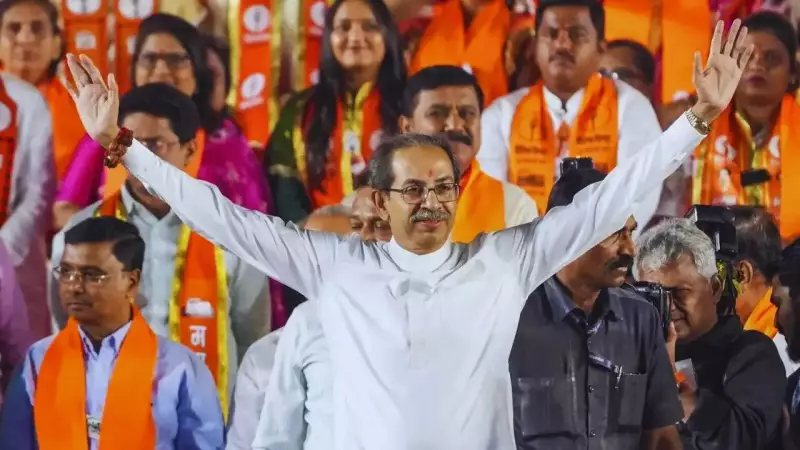
MUMBAI: Shiv Sena (UBT) chief Uddhav Thackeray delivered a fiery speech to his party workers in Mumbai. This was his first public address after the Brihanmumbai Municipal Corporation election results came out. Thackeray struck a defiant tone throughout his remarks.
Thackeray Accuses BJP of Betrayal
Thackeray made strong allegations against the Bharatiya Janata Party. He said the BJP wants to mortgage Mumbai to outsiders. He claimed the party won the BMC polls through betrayal and deception. Thackeray asserted that the Marathi manoos, or Marathi people, will never forgive this sin.
"BJP couldn't finish off Shiv Sena on the ground," Thackeray declared. "They can't buy loyalty despite employing all means." He emphasized that betrayers might be purchased through money, pressure, investigative agencies, and political tactics. However, true loyalty remains never for sale.

Clear Difference Between BJP and Shiv Sena
Thackeray highlighted what he called a clear difference between the BJP and his party. He acknowledged that Shiv Sena may have been targeted on paper through political maneuvers. Yet he insisted no one can erase the party from the hearts of the people.
"Our responsibility is now greater than ever," Thackeray told the gathered workers. He expressed his dream to see a Shiv Sena (UBT) mayor elected in Mumbai. "If God willing, it will happen," he added with determination.
Shiv Sena (UBT) Reaction on Social Media
Earlier, Shiv Sena (UBT) issued its first official reaction on social media platforms following the BMC results. The party declared that this battle is not over yet. They vowed to continue the fight until the Marathi person receives the respect they deserve in Mumbai's political landscape.
Performance in Marathi Heartland Areas
The BMC elections revealed interesting geographical patterns. The Shiv Sena (UBT) alliance with Raj Thackeray's Maharashtra Navnirman Sena performed strongly in specific areas. They dominated in parts of south and central Mumbai, traditionally considered the Marathi heartland.
The alliance won most of the approximately twenty wards in these regions. In Worli, the Thackeray cousins secured six out of seven seats. This happened despite facing rebel candidates in four wards there. The MNS itself won just six seats overall in the election.
In contrast, the Eknath Shinde-led Shiv Sena secured only two seats in these Marathi heartland areas. Shinde had split from the original Shiv Sena about three and a half years ago.
Mahayuti Alliance Gains Control
The ruling Mahayuti alliance, strongly supported by Mumbai's Gujarati community, achieved significant victories in other parts of the city. They won all seats in Mulund and seven of the eleven seats in Ghatkopar's N ward.
After nearly three decades controlling India's richest civic body, the Thackeray family has lost control of the BMC. The Mahayuti alliance, led by the BJP and former Shiv Sena loyalist Eknath Shinde, now holds power.
Narrow Majority in 227-Member House
The Mahayuti alliance crossed the crucial halfway mark of 114 seats in the 227-member BMC House. The BJP emerged as the single largest party with 89 seats. Shinde's Shiv Sena won 29 seats, giving the BJP a narrow lead.
This means the BJP will need continuous support from Shinde's Sena for all major decisions in the civic body. The alliance remains somewhat fragile despite their combined numbers.
Uddhav-Raj Combine Retains Influence
The Uddhav Thackeray and Raj Thackeray combine won a total of 71 seats. Uddhav's Shiv Sena (UBT) secured 65 of these seats, while Raj Thackeray's MNS won the remaining six.
This performance demonstrates that the Thackeray-led alliance retains significant influence in Mumbai's Marathi heartland. They continue to command substantial support among the city's Marathi-speaking population.
Poor Show in Neighbouring Urban Centres
However, the alliance performed poorly in neighbouring urban centres beyond Mumbai. This includes important cities like Thane and Navi Mumbai, where they failed to make significant electoral gains.
The BMC election results have clearly redrawn Mumbai's political map. Different alliances now dominate different geographical and community segments of the city.