In a sharp political retort, the Trinamool Congress (TMC) has dismissed Union Home Minister Amit Shah's claim that the Bharatiya Janata Party (BJP) will secure a two-thirds majority in the next West Bengal assembly elections. The ruling party of Bengal has countered by predicting that the BJP will fail to win even 50 seats in the state.
The Clash of Claims: Shah's Prediction vs. TMC's Rebuttal
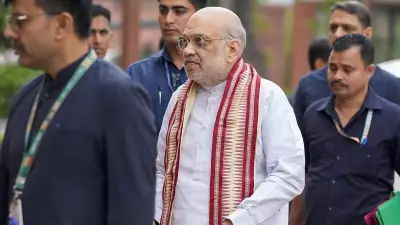
The political skirmish was triggered on 30 December 2025, when Amit Shah, addressing a press conference, projected a decisive victory for the BJP in the state. Shah claimed the BJP would form the next government in West Bengal with a "two-thirds majority in 2026." This statement was made as part of the BJP's long-term electoral strategy for the eastern state, where it has been striving to expand its footprint.
The TMC's response was swift and dismissive. Party leaders slammed Shah's assertion as "detached from ground reality" and an attempt to boost the morale of a demoralized state unit. Instead of a sweeping majority, the TMC forecasted a dismal performance for the BJP, asserting that the saffron party "won't cross 50 seats" in the 294-member West Bengal Legislative Assembly.

Analyzing the Political Ground in West Bengal
This exchange highlights the intense and ongoing political rivalry between the two parties. The BJP made significant inroads in Bengal during the 2019 Lok Sabha elections and the 2021 state polls, emerging as the principal opposition. However, the TMC, led by Chief Minister Mamata Banerjee, managed to retain power with a strong majority in 2021.
The battle for 2026 is already heating up, with both sides setting starkly contrasting narratives. The BJP's claim of a two-thirds majority signals its ambition to unseat the TMC, while the latter's counter-prediction is a clear message that it considers the BJP's influence to be waning or stagnant in the state.
Implications for the 2026 Electoral Battle
This war of words is more than just rhetoric; it sets the stage for the upcoming electoral campaign. By publicly stating these contrasting goals, both parties are aiming to shape public perception, motivate their cadre, and test political waters.
The TMC's aggressive rebuttal is designed to project confidence and undermine the BJP's narrative of growth in Bengal. It seeks to portray the BJP as an outsider making unrealistic claims. Conversely, Amit Shah's bold prediction is a strategic move to project the BJP as the inevitable future of Bengal politics, aiming to create a bandwagon effect.
As the date 30 December 2025 marks this verbal duel, political observers note that the road to the 2026 West Bengal elections will be fraught with such clashes, defining the political discourse in one of India's most politically vibrant states.