

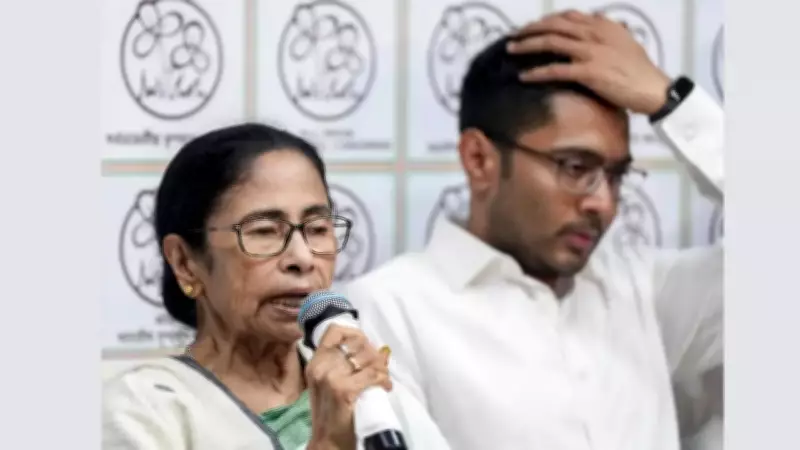
The Trinamool Congress (TMC) on Wednesday dissolved all its committees and frontal organisations in West Bengal, following a rebellion led by Rathindra Bose, who secured support from nearly 60 MLAs and met the governor. The move is seen as a major crisis for the Mamata Banerjee-founded party, which recently suffered a heavy defeat in the West Bengal assembly elections after 15 years in power.
Party Announces Restructuring
The TMC stated that it will undertake a comprehensive introspection, performance review, and organisational assessment at every level. The organisational structure of the parent body and all frontal wings will be reconstituted and announced in due course. This is viewed as a last-ditch effort to avert a potential vertical split, reminiscent of the 2022 Shiv Sena split led by Eknath Shinde against Uddhav Thackeray.
Rebel Strength Crosses Two-Thirds Mark
The turmoil intensified on Wednesday as nearly 60 of TMC's 80 MLAs attended a meeting at the assembly. This number is significant because it crosses the two-thirds threshold required to avoid disqualification under the anti-defection law. Earlier, TMC MLA Mustafizur Rahman confirmed that 59 signatures had been received, including his own.

Letter Refers to Mamata as Chairperson
In a significant political message, the letter submitted to the assembly speaker referred to Mamata Banerjee as the party's chairperson, suggesting that the rebel camp is challenging the current leadership of the legislature party rather than the TMC chief herself. Sources close to the dissident group also indicated that the legislators have rejected any role for Abhishek Banerjee in determining the affairs of the legislature party.
Leadership Responds
The TMC leadership described the move as an act of disloyalty. Senior party leader Kunal Ghosh argued that grievances could have been addressed within the organisation. "If they had any issues, they could have discussed them within the party. Instead, they chose to backstab the party," he told reporters. Ghosh labelled the rebels as "traitors" and maintained that the party would stay united under Mamata Banerjee's leadership.
Origins of the Showdown
The crisis traces back to a meeting of newly elected MLAs at Mamata Banerjee's residence on May 6. During the meeting, legislators authorised the party leadership to decide appointments for Leader of the Opposition, deputy leaders, and chief whip. The TMC then informed the assembly that Sovandeb Chattopadhyay would be LoP, Nayana Bandyopadhyay and Ashima Patra as deputy leaders, and Firhad Hakim as chief whip. However, the assembly secretariat did not process the communication, citing procedural rules requiring a formal meeting of the legislature party.
Allegations of Signature Misuse
Tensions rose after dissident MLAs alleged that their signatures were misused in the communication sent to the assembly secretariat. The party leadership denied the accusation and countered that the rebels were trying to undermine the organisation following its electoral setback. The standoff intensified with the expulsion of Ritabrata Banerjee and Sandipan Saha from the party.
Prominent Faces of Rebellion
Ritabrata Banerjee, who was expelled by the party leadership, has emerged as the most prominent face of the rebellion. The presence of veteran leader Javed Khan, a close Mamata Banerjee loyalist since the party's early days, has further strengthened the dissident camp's political standing.
Wider Debate Over Opposition Space
The developments have sparked a wider debate over control of the opposition space in the assembly. While securing the post of Leader of the Opposition requires the support of only 30 MLAs, the larger battle now appears to centre on the legitimacy and control of the legislature party itself.






