

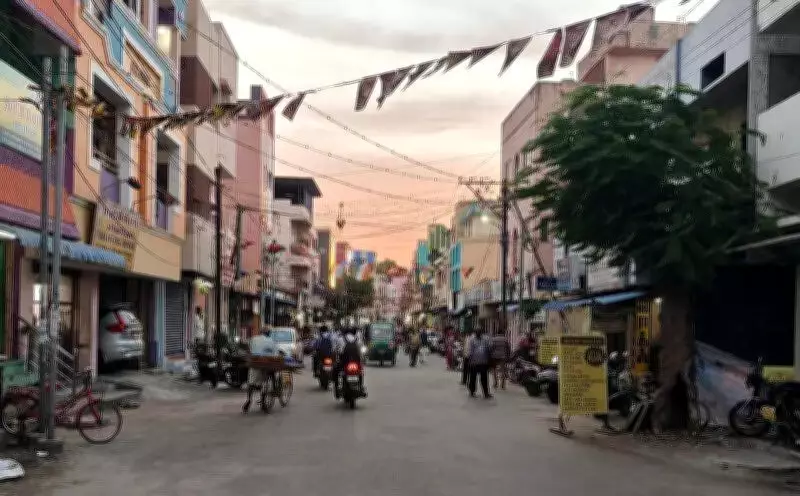
Trichy Assembly Election Campaign Witnesses Sharp Drop in Traditional Street-Corner Meetings
In a significant shift from past electoral practices, major political parties in Trichy overwhelmingly bypassed traditional street-corner meetings throughout the month-long campaign for the assembly election, which concluded on Tuesday. Despite the city police granting permission for public gatherings at approximately 69 designated points, iconic meeting spots near the city remained conspicuously quiet during what is typically the peak campaign season.
Historic Venues Left Unused as Campaign Strategies Evolve
Traditional campaign venues in Trichy, renowned for hosting speeches by state and national leaders during previous elections, saw virtually no activity this time. These locations include:
- Sarukkupaarai near Rockfort
- Sedal Mariyamman Koil near Bhima Nagar
- Eda Street Anna statue in Palakkarai
- Kora Street junction in Woraiyur
Until the 2021 assembly election, these permitted spots regularly hosted multiple campaign events, with podiums typically set up late in the evening and continuing into the night. During such gatherings, shops along the roads would often close their shutters, and vehicular movement was partially diverted to accommodate the crowds.

Parties Opt for Alternative Campaign Methods
In this election cycle, with the sole exception of MDMK leader Vaiko's public meeting at Woraiyur Pandamangalam, other prominent venues remained completely unutilized. Instead of organizing small podiums with seating arrangements, political parties have pivoted toward more personalized outreach methods.
K Suresh, a CPI councillor from Woraiyur, explained the rationale behind this strategic shift: "There are two primary reasons for parties skipping street-corner meets. First, to curtail expenditure for the candidate, and second, the limited time slot available to complete the campaign. The process of applying for permissions also discouraged parties from pursuing these traditional gatherings."
Financial Constraints and Regulatory Factors
The Election Commission of India (ECI) established specific financial guidelines that contributed to this trend. The commission fixed the rate for establishing podiums for street-corner meetings at Rs 640 per square foot. While the overall spending cap for a candidate was set at Rs 40 lakh, parties expressed hesitation over additional hiring charges, such as the fixed rate of Rs 25 per plastic chair.
Most street-corner meeting zones in Trichy have a capacity ranging between 250 and 1,500 people per site, making them potentially costly to organize under the new financial regulations.
Changing Voter Engagement and Environmental Factors
T Radhakrishnan, a public speaker from the DMK, highlighted additional factors influencing this shift: "Sultry weather has taken a toll on the energy level of not just candidates but speakers and cadres too. The culture of setting up a stage and attracting crowds is slowly vanishing, as people are not too keen to listen for hours on end."
This evolution in campaign methodology reflects broader changes in how political parties engage with voters, moving away from large, stationary gatherings toward more dynamic and targeted approaches.
Mixed Reactions from Trichy Residents
The absence of traditional street meetings has elicited mixed responses from Trichy residents. Some citizens feel fortunate to have avoided the noise pollution typically associated with these events, appreciating the quieter campaign period. However, another segment of the population expresses disappointment at missing what has traditionally been a quintessential experience of listening to political speeches once every five years.
This transformation in Trichy's electoral landscape underscores how political campaigning is adapting to new financial realities, regulatory frameworks, and changing public preferences, potentially signaling a permanent shift away from traditional street-corner meetings in future elections.






