

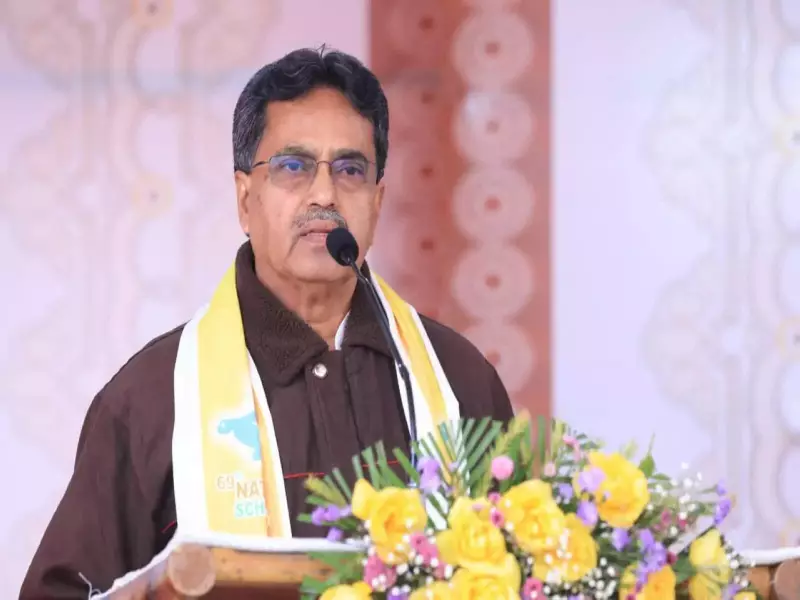
In a decisive move to enhance road safety, Tripura Chief Minister Manik Saha has instructed the state administration to adopt the highly regarded Gujarat model of road safety. The directive aims to build a safer and more robust road network across the entire state.
Three Pillars of the Gujarat Model
Chairing a road safety review meeting, CM Saha elaborated that the successful Gujarat framework is built on three fundamental pillars. These are the use of advanced technology, strict law enforcement, and a system for swift post-accident rescue coupled with immediate medical support. He explicitly asked officials to integrate these core elements into Tripura's own road safety strategy.
While acknowledging that Tripura's accident rate is currently below the national average, the Chief Minister warned against any complacency. He set an ambitious target for the state: achieving zero fatalities on its roads. To address immediate risks, Saha directed authorities to expedite the construction of footpaths along major roads in the capital, Agartala, to significantly strengthen pedestrian safety.

Technology and Infrastructure Upgrades
As part of the tech-driven approach, the state government plans a significant expansion of surveillance systems. This includes installing more CCTV cameras and implementing GPS-based vehicle tracking systems to monitor traffic flow and curb violations effectively. Additionally, speed guns will be deployed in areas identified as accident-prone to deter speeding.
Highlighting the critical importance of the "golden hour"—the first hour after a traumatic injury—CM Saha announced plans to establish additional trauma care centres across Tripura. These facilities are crucial for providing immediate, life-saving treatment to accident victims. To bolster first response, he also instructed that police and fire service personnel be given specialised first-aid training.
Ensuring Strict Enforcement and Training
Speaking at the meeting, Transport Minister Sushanta Chowdhury provided details on emergency response readiness, noting that 16 advanced ambulances are available round the clock for rapid deployment. He also flagged a major risk factor: untrained drivers. Minister Chowdhury directed the transport department to enforce a strict policy ensuring driving licences are issued only after rigorous testing, leaving no room for compromise on driver competency.
The comprehensive review meeting signals the state government's serious intent to overhaul road safety mechanisms. By borrowing proven strategies from Gujarat and tailoring them to local needs, Tripura aims to create a safer travel environment for all its citizens and work relentlessly towards the goal of eliminating road deaths.






