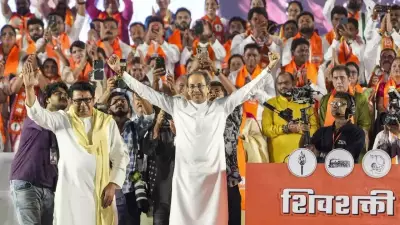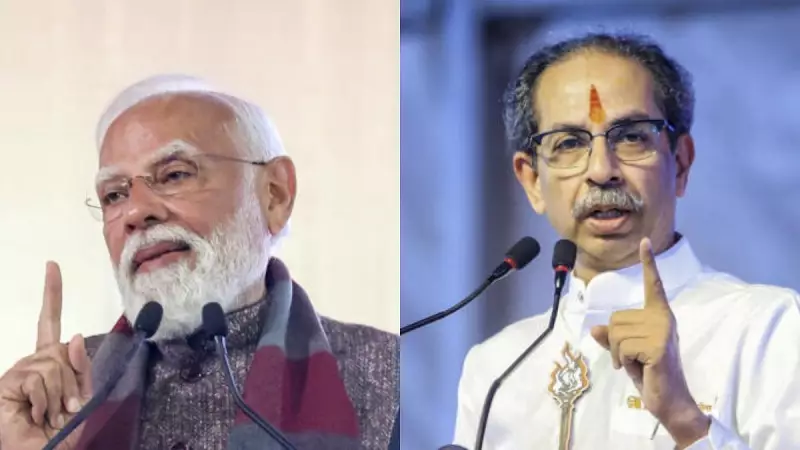
In a fiery address that has intensified the political rhetoric in Maharashtra, Shiv Sena (UBT) chief Uddhav Thackeray launched a scathing attack on Prime Minister Narendra Modi. Thackeray accused the PM of actively working to "finish" his party, despite his own past efforts to campaign for Modi's ascension to the country's top post.
A Stinging Accusation of Betrayal
Addressing a party gathering on Monday, Thackeray framed the current political battle as a deeply personal betrayal. He reminded the audience that he had campaigned extensively during the 2014 Lok Sabha elections with the sole aim of making Narendra Modi the Prime Minister. His statement, "I campaigned to make Modi PM," highlighted a historical alliance that has now completely shattered.
"Today, the same Modi is out to finish my party," Thackeray declared, capturing the essence of his grievance. This accusation forms the core of the Shiv Sena (UBT)'s campaign narrative as it prepares for a high-stakes electoral battle against the BJP and the rival Shiv Sena faction led by Maharashtra Chief Minister Eknath Shinde.
The Context: A Battle for Survival and Legacy
The dramatic fallout stems from the split in the original Shiv Sena in 2022, when Eknath Shinde rebelled with a majority of MLAs, toppled the Maha Vikas Aghadi (MVA) government, and allied with the BJP. The Election Commission subsequently awarded the party name "Shiv Sena" and its iconic bow-and-arrow symbol to the Shinde faction.
Thackeray's faction, now fighting as Shiv Sena (UBT), is contesting the legitimacy of the Shinde group and positioning itself as the true inheritor of Bal Thackeray's legacy. Thackeray's direct attack on Modi signals a shift from targeting only Shinde to holding the national leadership of the BJP responsible for the party's crisis. He portrayed the upcoming elections as a "do-or-die" battle for his party's very existence against a powerful political machinery.
Political Repercussions and Electoral Strategy
This sharpening of attacks is a calculated move in the heat of the Lok Sabha election season. By framing the contest as a fight against a central leadership intent on his party's destruction, Thackeray aims to consolidate his core Marathi vote bank and galvanize sympathy. It seeks to paint the BJP as a party that uses and discards allies for its own gains.
The strategy also serves to distinguish his faction clearly from the Shinde-led Shiv Sena, which is in a comfortable alliance with the BJP. Thackeray's narrative is one of resistance against a dominant force, hoping to rally anti-BJP and anti-Modi sentiments within the state under the broader opposition MVA umbrella, which includes the Congress and the NCP (Sharadchandra Pawar faction).
The political atmosphere in Maharashtra, a key state with 48 Lok Sabha seats, is now charged with these allegations of betrayal and existential threats. Thackeray's remarks are likely to set the tone for a bitterly fought campaign where personal and political histories will be repeatedly invoked to sway public opinion.