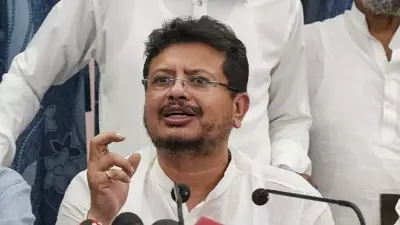
For the first time in over two decades, political cousins Uddhav Thackeray of Shiv Sena (UBT) and Raj Thackeray of the Maharashtra Navnirman Sena (MNS) have joined forces to contest the crucial Brihanmumbai Municipal Corporation (BMC) elections. Framing this alliance as a necessary defense of Mumbai's Marathi character, Uddhav Thackeray has launched a scathing attack on the ruling MahaYuti coalition, accusing it of being bound together solely by the "spoils of office" and rampant corruption.
A Strategic Alliance Forged on Identity
In a detailed conversation, Uddhav Thackeray dismissed accusations of opportunism leveled by the BJP against the Sena-MNS tie-up. He countered by pointing out the BJP's own partnerships with parties like Congress in Ambernath and AIMIM in Akot. "We've come together to preserve Mumbai and Maharashtra's Marathi identity," Thackeray asserted, drawing a sharp contrast with the MahaYuti. He claimed that "unabated corruption is the glue" that holds the BJP and Chief Minister Eknath Shinde's faction together.
Addressing the shifting political landscape, Thackeray explained his party's previous alliance with Congress as a forced move after the BJP "failed to keep their promise and broke our trust." With the MNS, however, the common agenda is clear and rooted in regional identity. He confirmed that the Congress's decision to go solo in the BMC polls was unilateral, leaving the future of that partnership uncertain post-January 16.

Corruption Takes Center Stage in BMC Battle
The issue of corruption has emerged as a primary battlefield in this election. Thackeray vehemently rejected the BJP's allegations that the city suffered under previous Sena regimes. Instead, he turned the spotlight on the current administration, making a staggering claim. He alleged that from 2022 to 2026, the present dispensation has indulged in corruption worth Rs 3 lakh crore, issuing work orders and doling out advances to favored contractors as kickbacks.
"Corruption was never so transparent in BMC as it is under the present govt," he stated. Thackeray criticized the lack of an elected body, noting that in his time, all parties were part of the standing committee. Today, he claims, the process is opaque, with tenders and work orders shrouded in secrecy. He expressed outrage over the alleged misuse of BMC's fixed deposits, asking, "Are FDs meant for distribution to contractors? FDs are meant to keep the system running for the next 100 years."
Development or Displacement? The Question of Mumbai's Future
Thackeray expanded his critique to the broader development model, linking it to his earlier controversial remark about "two Gujaratis" swallowing Mumbai. He posed a series of pointed questions about major projects: Who got the contracts for electric meters? Who is developing Dharavi and getting the Transferable Development Rights (TDR)? Who acquired the Deonar dumping ground, salt pan lands, and Kurla Mother Dairy land?
"If you answer these questions, then you will know what I'm saying," he remarked, emphasizing that his opposition is not to development itself but to what he sees as a predatory pattern. He lamented the city's current state—dug up, with poor air quality—calling it "development without planning." On the communal tone of some campaigns, he accused rivals of using Hindu-Muslim divisions merely as a tool to create fissures and profit from them.
Finally, on the long-pending Supreme Court case regarding the disqualification of MLAs and the "real Shiv Sena" title, Thackeray expressed deep frustration. Noting that the petition has seen the tenure of six Chief Justices of India, he quipped, "I wonder if we will end up saying 'Ab tak 56'." He underscored the adage that justice delayed is justice denied, adding that after the BMC polls, the petition's relevance would diminish further.