Udhayanidhi Stalin Launches Scathing Attack on AIADMK-BJP Alliance Ahead of 2026 Tamil Nadu Polls
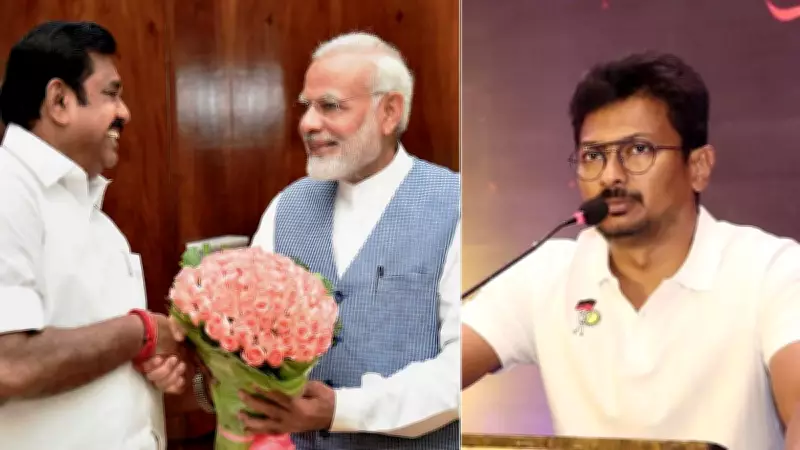
In a fiery political statement that has stirred the electoral landscape, DMK leader and Tamil Nadu Minister Udhayanidhi Stalin has accused AIADMK chief Edappadi K. Palaniswami (EPS) of "selling" his party to the Bharatiya Janata Party (BJP) for the upcoming 2026 Tamil Nadu Assembly elections. The young DMK scion did not mince words, branding the AIADMK-BJP alliance as "Delhi-made," implying it is orchestrated from the national capital rather than reflecting local Tamil interests.
Sharp Allegations of Party 'Sale' to BJP
Udhayanidhi Stalin's remarks, made during a recent public address, have escalated the political rhetoric in the state. He drew a stark comparison between the 2021 elections and the forthcoming 2026 polls, stating that while Palaniswami had merely "rented out" the AIADMK to the BJP in the last electoral cycle, he has now gone a step further by "selling" the party entirely. This metaphorical language suggests a deepening and more permanent alignment between the AIADMK and the BJP, which Udhayanidhi portrays as a betrayal of Tamil Nadu's autonomous political spirit.
The DMK leader emphasized that this move undermines the AIADMK's legacy and its historical stance as a regional force. By labeling the alliance "Delhi-made," he insinuates that it is imposed from outside, potentially alienating voters who prioritize state-centric governance and cultural identity. This critique taps into long-standing sentiments in Tamil Nadu politics, where regional parties have often positioned themselves against perceived northern or central interference.

Context of the 2026 Tamil Nadu Assembly Elections
The 2026 Tamil Nadu Assembly elections are shaping up to be a highly contested battle, with the ruling DMK-led alliance facing off against the AIADMK-BJP coalition. Udhayanidhi's accusations come at a crucial time, as parties begin to solidify their strategies and narratives. His comments aim to frame the AIADMK as subservient to national BJP interests, a narrative that could resonate with voters wary of external dominance.
Political analysts note that such allegations are part of a broader trend in Indian politics, where regional parties accuse each other of compromising local agendas for national alliances. In this case, Udhayanidhi is leveraging his party's strong regional identity to challenge the AIADMK's credibility. The DMK has historically championed Tamil pride and autonomy, and this attack aligns with that legacy, potentially galvanizing its support base.
Potential Implications for the Electoral Dynamics
Udhayanidhi Stalin's remarks could have several implications for the upcoming elections:
- Polarization of Voters: By highlighting the "Delhi-made" nature of the alliance, Udhayanidhi may seek to polarize the electorate along regional versus national lines, appealing to those who favor homegrown leadership.
- Damage to AIADMK's Image: The accusation of "selling" the party might tarnish the AIADMK's reputation as an independent entity, possibly swaying undecided voters or those disillusioned with perceived compromises.
- Strengthening DMK's Position: This aggressive stance reinforces the DMK's narrative of being the true guardian of Tamil Nadu's interests, potentially consolidating its voter base ahead of the polls.
As the election campaign intensifies, such verbal sparring is expected to continue, with both sides likely to exchange barbs over alliances and allegiances. Udhayanidhi's comments have set a confrontational tone, emphasizing the high stakes in Tamil Nadu's political arena. The response from the AIADMK and BJP will be closely watched, as they navigate these allegations while building their campaign around development and governance issues.
In summary, Udhayanidhi Stalin's sharp critique of Edappadi K. Palaniswami and the AIADMK-BJP alliance adds a volatile layer to the pre-election discourse, framing the 2026 Tamil Nadu Assembly elections as a battle between regional autonomy and national influence. With the polls still some time away, these early salvos indicate a fiercely competitive race ahead, where rhetoric and identity politics will play pivotal roles in shaping voter perceptions and outcomes.