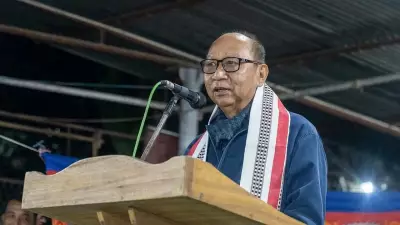
UP BJP Chief Pankaj Chaudhary Unveils Comprehensive Roadmap for 2027 Assembly Elections
In a significant political development, Uttar Pradesh Bharatiya Janata Party (BJP) President Pankaj Chaudhary has laid out a detailed and strategic roadmap for the crucial 2027 Assembly elections. Speaking at a conclave organized in his parliamentary constituency of Maharajganj on Sunday, Chaudhary emphasized that the party's approach will be built on three fundamental pillars: organizational strength, inclusive development, and coordinated governance.
Organizational Supremacy Over Dynasty and Caste
Chaudhary strongly asserted that the BJP remains an organization-driven political entity, fundamentally distinct from parties centered on dynasty, caste, or individual personalities. "The organization is supreme, and governments are formed through the dedication and hard work of our workers," he declared, expressing profound gratitude to the party's national leadership for entrusting him with the responsibility of leading the state unit.
He reiterated that the collective effort of the party organization forms the indispensable backbone of governance. On the critical matter of candidate selection, Chaudhary clarified that ticket distribution in the BJP follows a rigorous, collective decision-making process. "No single individual decides. It involves thorough review, multiple meetings, and extensive deliberations," he explained, underscoring the party's democratic internal mechanisms.

Inclusive Development as Governing Philosophy
The BJP leader maintained that the party's flagship slogan, 'Sabka Saath, Sabka Vikas' (Together with All, Development for All), is not merely a political catchphrase but a deeply ingrained governing philosophy. He stated that this reflects the BJP's unwavering commitment to representing and uplifting all sections of society without discrimination.
Taking a pointed swipe at opposition parties, Chaudhary alleged that outfits rooted in dynastic politics are inherently incapable of genuinely advocating for social justice. He noted that previous electoral alliances among opposition parties have already been tested and rejected by the voters of Uttar Pradesh, highlighting a perceived lack of credible alternatives.
Synergy of Party and Government: The Double-Engine Model
Highlighting the crucial coordination between the party organization and the government, Chaudhary described them as "two sides of the same coin." He asserted that this synergy ensures the organization effectively communicates public concerns and grievances to the government while simultaneously ensuring the efficient delivery of central and state welfare schemes directly to households.
This integrated model, he claimed, would further accelerate the pace of development under the "double-engine government"—a reference to the BJP being in power at both the state and central levels. Chaudhary credited the Modi government's focus on "Antyodaya" (upliftment of the last person) over the past eleven years for prioritizing the most marginalized communities through sustained investments in infrastructure, welfare initiatives, and economic strengthening, which he said has enhanced India's global standing.
Confidence in Continued Success and Development Record
Referring specifically to Uttar Pradesh, Chaudhary claimed that the state has witnessed a remarkable transformation in law and order, becoming more secure and reliable than in previous eras. This improved environment, he argued, has directly contributed to increased investment, robust industrial growth, and significant employment generation across the state.
Thanking the people of Maharajganj for their steadfast support, Chaudhary reflected on his own political journey from a grassroots worker to the state president, viewing it as a testament to public trust and strict organizational discipline. He pointed to the visible development changes in the region from 1991 to 2026 as concrete evidence of sustained and tangible progress under BJP-led initiatives.

Looking ahead to 2027, Pankaj Chaudhary expressed unwavering confidence. He believes that the combined strength of the party organization, the unparalleled enthusiasm of its workers, and the continued trust of the people will secure the BJP a decisive and historic third consecutive term in Uttar Pradesh, solidifying its political dominance in India's most populous state.