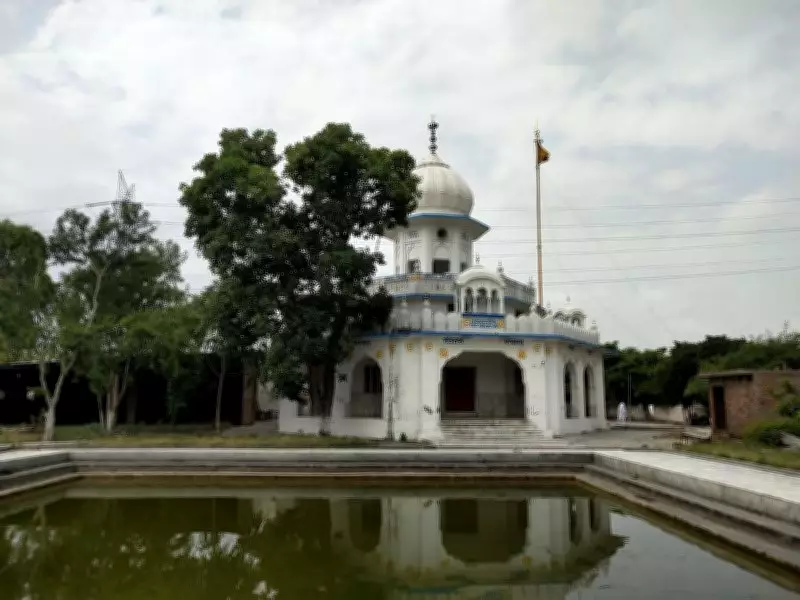
Varpal village, located in Amritsar, is home to an extraordinary 45 gurdwaras, a feat likely unmatched anywhere in the world. Each gurdwara is built in memory of the martyred Sikhs who laid down their lives fighting the invading Afghan army led by Ahmad Shah Abdali.
Historical Background
In 1757 AD, the Durrani army under Ahmad Shah Abdali marched towards the Golden Temple to avenge losses suffered at the hands of the Sikh misls. In response, a group of Sikhs led by Baba Deep Singh set out from Rajasthan. After passing through various areas, they reached the common border of villages Varpal, Gohalwar, and Chabba. A fierce battle ensued, where hundreds of valiant Sikhs sacrificed their lives fighting the invaders.
Gurdwaras Erected in Memory
Later, numerous gurdwaras were raised in Varpal to commemorate the martyrs. The last rites of the Sikhs who died in this bloody battle were performed at Gurdwara Bachauna Sahib, which is now maintained by the Kar Sewa sect of Qila Anandgarh Sahib. Among all the gurdwaras, it is the most prominent. Other gurdwaras include Baba Rala Singh, Prem Singh, Gurdwara Baba Pritam Singh, Gurdwara Kul Sahib, Gurdwara Jand Sahib, Gurdwara Baba Kannan Singh, Gurdwara Baba Baggeana Sahib, Gurdwara Ber Sahib, Gurdwara Baba Santokh Singh, Gurdwara Baba Kartar Singh, Gurdwara Baba Harcharan Singh, Gurdwara Baba Arur Singh, Baba Dayal Singh (Rori Sahib), Gurdwara Baba Dharam Singh, Baba Tara Singh, Gurdwara Baba Ajit Singh, Gurdwara Baba Jawand Singh, Gurdwara Baba Kartar Singh, Gurdwara Baba Jeevan Singh, Gurdwara Baba Bakhua Sahib, Gurdwara Baba Kala Mehr, Gurdwara Baba Kapur Singh, Gurdwara Pir Panjal, Gurdwara Baba Himmat Singh, Gurdwara Baba Fauja Singh, Gurdwara Shaheed Baba Balihar Singh, Shaheed Baba Bahl Singh, and many more.

Participation in Historical Movements
In the 20th century, residents of Varpal took part in the historic Jaito Morcha. In 1924, after praying at Akal Takht, the first group of 500 Sikhs left for the Jaito Morcha. The group was led by Udham Singh, a resident of Varpal village, who sacrificed his life on February 20-21, 1924.
World War II Contributions
Three bravehearts of Varpal village participated in the second World War: Havildar Mihan Singh (son of Dhan Singh) of the 93rd Burma Infantry, Sepoy Gurcharan Singh (son of Hari Singh) of the 14th Punjab Regiment, and Havildar Niranjan Singh (son of Bishan Singh) of the 14th Punjab Regiment.
Operation Bluestar and Aftermath
In 1984, 11 residents of the village were killed during Operation Bluestar, and Raj Singh, Gurmej Singh, and Karam Singh were jailed in Jodhpur.
Annual Festivals and Land
Apart from the birth anniversaries of the Gurus, big Jor Melas are organized every year in the village dedicated to the martyrs. The village has 4,000 acres of land and 150 acres of government land, out of which 50 acres are arable.
Origin of the Village Name
Regarding the origin of Varpal village, a popular tale among residents is that its early settlers came from Dhudike (Moga), the ancestral village of freedom fighter Lala Lajpat Rai. A woman from the early settlers brought her brother to the village and arranged for his stay here, earning the village the name “Veer Wali”. Gradually, the pronunciation evolved to Varpal. Muslim families of the village who migrated to Pakistan during the Partition in 1947 also named their settlement Varpal.