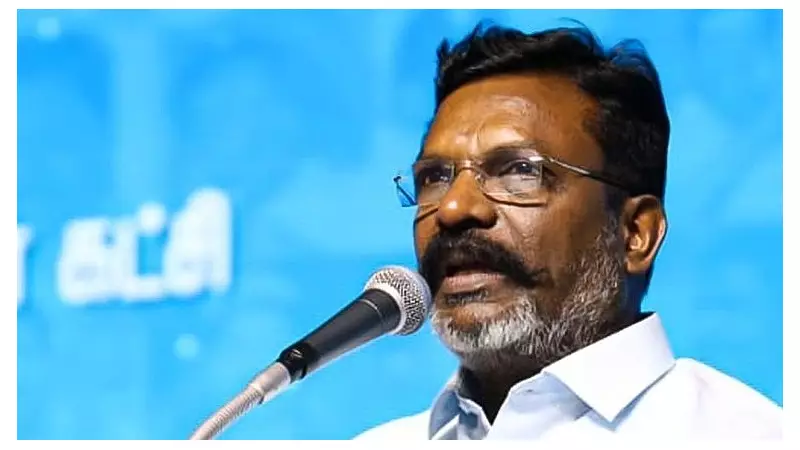
Thol. Thirumavalavan, the founder and leader of the Viduthalai Chiruthaigal Katchi (VCK), has issued a strong warning against attempts to sow communal division in Tamil Nadu. He asserted that efforts to polarize the state's society along religious lines, as seen in parts of northern India, are destined to fail.
Allegations of Deliberate Polarization
In a statement made on 22 December 2025, Thirumavalavan pointed a direct finger at the Rashtriya Swayamsevak Sangh (RSS) and allied Hindu organizations. He claimed these groups are making a deliberate attempt to create conflict between Hindu and minority communities within Tamil Nadu. The VCK leader's core allegation is that this strategy is a calculated import from northern Indian states, where similar tactics have been employed.
The political motive behind this, according to Thirumavalavan, is clear-cut. He believes the RSS and its affiliates are using communal tension as a tool to gain a foothold in Tamil Nadu's distinct political landscape. The state has historically followed a different socio-political trajectory, often emphasizing Dravidian identity and social justice over religion-based politics.

A Firm Belief in Tamil Nadu's Social Fabric
Despite these alleged efforts, the VCK founder expressed unwavering confidence in the resilience of Tamil Nadu's social harmony. "The attempt to divide people on communal lines will not succeed in Tamil Nadu," he declared. This statement underscores a belief that the state's populace will reject politics based on religious polarization.
Thirumavalavan's remarks highlight a significant political fault line. They frame the political struggle in Tamil Nadu not just as a contest between parties, but as a battle for the state's fundamental social character. The VCK, a party championing the rights of Scheduled Castes and minorities, positions itself as a bulwark against majoritarian communal politics.
Context and Implications
This statement comes amid ongoing national debates about secularism, minority rights, and the political strategies of various organizations. By publicly naming the RSS and warning against its activities, the VCK leader is making a definitive political stand. It signals a commitment to confront what he perceives as an external threat to Tamil Nadu's established social order.
The implications are multifaceted:
- Political Mobilization: It serves to consolidate anti-BJP/anti-RSS votes around parties like the VCK and its allies in the Dravidian and secular fronts.
- Public Discourse: It brings the issue of alleged communal engineering to the forefront of Tamil Nadu's political conversation.
- Strategic Positioning: It clearly delineates the VCK's role as a party opposing the Sangh Parivar's ideological expansion in the south.
Ultimately, Thirumavalavan's message is one of defiance and assurance. He is challenging the perceived strategy of the RSS while assuring the people of Tamil Nadu that their social cohesion is strong enough to withstand such divisive campaigns.