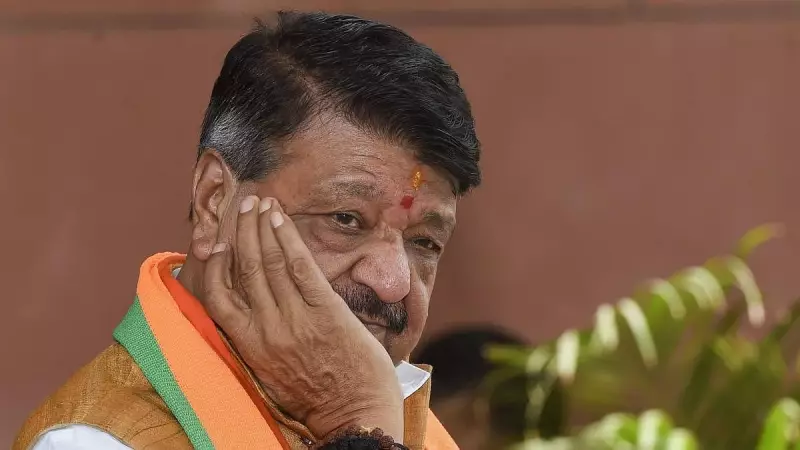
A fresh controversy has erupted in Madhya Pradesh after a senior state minister made comments perceived as dictating a 'Lakshman rekha' for women regarding their choice of clothing. Cabinet Minister Kailash Vijayvargiya, often vocal on cultural issues, has stirred a debate by indirectly holding women's attire responsible for inviting unwanted attention.
The Controversial Advice on Culture and Clothing
In his recent statements, the minister positioned himself as a custodian of traditional values. He advised women to avoid wearing what he described as 'revealing clothes' and cautioned them against crossing certain undefined limits. The core of his argument suggested that by not adhering to these boundaries, women could be held accountable for attracting negative or unsolicited attention from men.
The comments, made on 10 January 2026, quickly transcended local news cycles, igniting a nationwide discussion on victim-blaming and the policing of women's autonomy. Vijayvargiya's use of the term 'Lakshman rekha'—a metaphor from Hindu mythology denoting a strict line not to be crossed—was particularly noted for its prescriptive and moralistic tone.

Public Backlash and Political Repercussions
The reaction to the minister's views was swift and largely critical. Social media platforms and women's rights groups accused Vijayvargiya of perpetuating regressive stereotypes and shifting the blame for harassment onto victims. Critics argued that such statements from a person in a position of power undermine ongoing efforts to promote gender equality and safety, which focus on teaching respect and consent rather than imposing restrictions on women's freedom.
Opposition parties in Madhya Pradesh seized the opportunity to condemn the remarks, labeling them as outdated and misogynistic. They demanded a public apology from the minister, stating that his views do not represent the progressive aspirations of modern India. The incident has put the state's ruling BJP in a delicate position, forcing a balance between its cultural nationalist base and a growing urban electorate that champions individual liberty.
A Pattern of Commentary
This is not the first time Kailash Vijayvargiya has made headlines for his comments on social and cultural issues. Known for his blunt style, he has previously expressed strong opinions on various subjects, often aligning with a conservative worldview. However, this particular intervention into women's personal sartorial choices has touched a raw nerve, resonating with the larger, ongoing national conversation about women's rights and safety in public spaces.
The debate raises fundamental questions about the role of political leaders in shaping social discourse. Should they advocate for personal freedom and responsibility, or should they enforce traditional norms through public advisories? The controversy surrounding the Madhya Pradesh minister's statement underscores the deep cultural and generational divides that continue to exist in Indian society.
As of now, there has been no official retraction or clarification from Minister Vijayvargiya. The story, first reported by journalist Milind Ghatwai, continues to develop, with civil society organizations planning to stage protests. The episode serves as a reminder that in the intersection of Indian politics, culture, and gender, a single statement can quickly become a national flashpoint.