

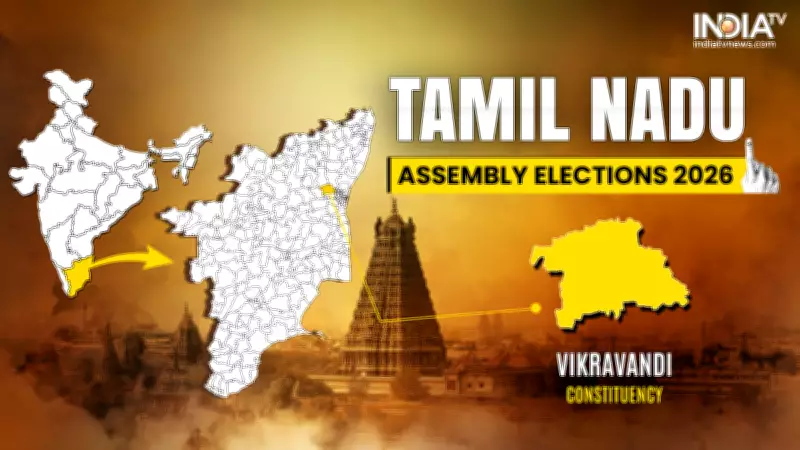
Vikravandi Assembly Seat: A Detailed Profile for Tamil Nadu's 2026 Elections
The Vikravandi assembly constituency, located in the Villupuram district of Tamil Nadu, is poised to be a significant battleground in the upcoming 2026 state legislative elections. This rural seat has witnessed dynamic political shifts over the years, reflecting broader trends in Tamil Nadu's electoral landscape. As parties gear up for the next polls, understanding Vikravandi's history, key players, and voter demographics becomes crucial for strategists and observers alike.
Historical Performance and Past Winners
Vikravandi has a rich electoral history marked by competitive contests between major Dravidian parties. In the 2021 Tamil Nadu Assembly elections, the seat was won by M. R. K. Panneerselvam of the Dravida Munnetra Kazhagam (DMK), who secured a decisive victory. His win was part of the DMK-led alliance's sweeping success across the state, which returned the party to power after a decade.
Prior to this, the constituency saw victories by other prominent leaders. In the 2016 elections, R. M. Babu Murugavel of the All India Anna Dravida Munnetra Kazhagam (AIADMK) emerged triumphant, capitalizing on the party's strong wave under the leadership of J. Jayalalithaa. Earlier cycles have also featured wins by candidates from parties like the Pattali Makkal Katchi (PMK), highlighting Vikravandi's role as a microcosm of Tamil Nadu's diverse political affiliations.

Victory Margins and Electoral Trends
The victory margins in Vikravandi have varied significantly, indicating the seat's competitive nature. In 2021, the DMK candidate won by a substantial margin, reflecting the party's robust performance in the region. Detailed analysis shows:
- 2021 Election: The DMK's margin was notable, contributing to the alliance's overall majority in the assembly.
- 2016 Election: The AIADMK secured a win with a comfortable margin, mirroring its statewide dominance at the time.
- Historical Context: Margins have often swung based on alliance dynamics, local issues, and candidate popularity, making Vikravandi a bellwether for political shifts.
These trends underscore the importance of grassroots campaigning and alliance management in this constituency, where even small swings can determine outcomes.
Key Candidates and Political Dynamics
Vikravandi has been represented by a mix of seasoned politicians and emerging leaders. The DMK's current MLA, M. R. K. Panneerselvam, is expected to seek re-election in 2026, leveraging incumbency and party support. Potential challengers may include candidates from the AIADMK, which is working to rebuild after recent setbacks, or from smaller parties like the PMK, which has a historical base in the region.
Factors influencing candidate selection and voter preferences include:
- Local Development Issues: Infrastructure, agriculture, and employment remain top concerns for Vikravandi's predominantly rural electorate.
- Alliance Strategies: The seat's outcome often hinges on pre-poll alliances, with parties like the DMK and AIADMK forming coalitions to maximize votes.
- Demographic Shifts: Changing population patterns and youth voter engagement could impact future contests.
Outlook for the 2026 Tamil Nadu Assembly Polls
As Tamil Nadu approaches the 2026 elections, Vikravandi is set to be a closely watched constituency. The DMK will aim to retain the seat as part of its strategy to maintain power, while opposition parties, particularly the AIADMK, are likely to mount a vigorous challenge. Emerging political forces and independent candidates may also play a role, adding complexity to the race.
Predictions suggest that Vikravandi's result could signal broader electoral trends, especially in rural Tamil Nadu. With issues like economic development, social welfare, and governance at the forefront, campaigns here will need to address both local and state-level concerns. Voter turnout and alliance cohesion will be critical factors in determining the winner.

In summary, the Vikravandi assembly seat offers a fascinating case study in Tamil Nadu politics, with its history of competitive elections and evolving dynamics. As parties prepare for 2026, this constituency will undoubtedly be a key focus, shaping the political narrative in the lead-up to the polls.





