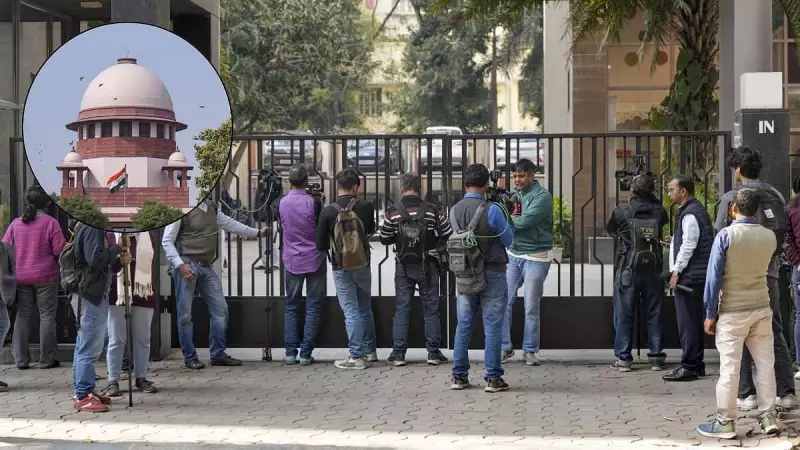
In a significant legal pre-emptive move, the West Bengal government has approached the Supreme Court of India, filing a formal caveat. This action comes directly in the wake of recent raids conducted by the Enforcement Directorate (ED) on the offices of Indian Political Action Committee (I-PAC), a prominent political consultancy firm.
Understanding the Caveat and Its Legal Significance
A caveat, in legal parlance, is a formal notice or warning filed by a litigant. The primary purpose of this procedural step is to ensure that no court, including the Supreme Court or high courts, passes an adverse order or judgment on a matter without first hearing the party who filed the caveat. By submitting this document on 10 January 2026, the West Bengal administration has legally secured its right to be heard if any related petition concerning the ED's actions is brought before the apex court by another entity.
This strategic legal maneuver highlights the state government's anticipation of potential legal challenges or appeals stemming from the federal agency's investigative operations. It effectively prevents any ex-parte orders that could impact the state's interests.
The Trigger: Enforcement Directorate's Action on I-PAC
The catalyst for this development was the series of searches carried out by the Enforcement Directorate. The ED, which is India's premier financial crime investigation agency, raided multiple premises linked to I-PAC. While the precise reasons for these raids, often connected to probes under the Prevention of Money Laundering Act (PMLA), were detailed in the original reports, the operation itself sent ripples through political circles.
I-PAC is known for its role in managing election campaigns and has been associated with several major political parties across the country, including the Trinamool Congress (TMC) which governs West Bengal. The raids, therefore, have direct and immediate political implications for the state's ruling dispensation.
Political Repercussions and the Road Ahead
The filing of the caveat underscores the escalating tension between the West Bengal state government, led by Chief Minister Mamata Banerjee, and central investigative agencies. It frames the upcoming legal discourse within the broader, ongoing political friction often observed between the Centre and opposition-ruled states.
The state's proactive legal step indicates a preparedness for a prolonged legal battle. It ensures that the Supreme Court will have to issue a notice to the West Bengal government before making any decision on future petitions related to this case, allowing the state to present its arguments and version of events formally.
This development, dated 10 January 2026, 09:59 IST, marks a crucial juncture. It transforms a law enforcement action into a potential constitutional and federal debate, poised to be played out in the hallowed chambers of the Supreme Court. The nation's eyes will now be on the apex court's registry to see if any petition is filed and how the judiciary navigates this politically sensitive investigation.