

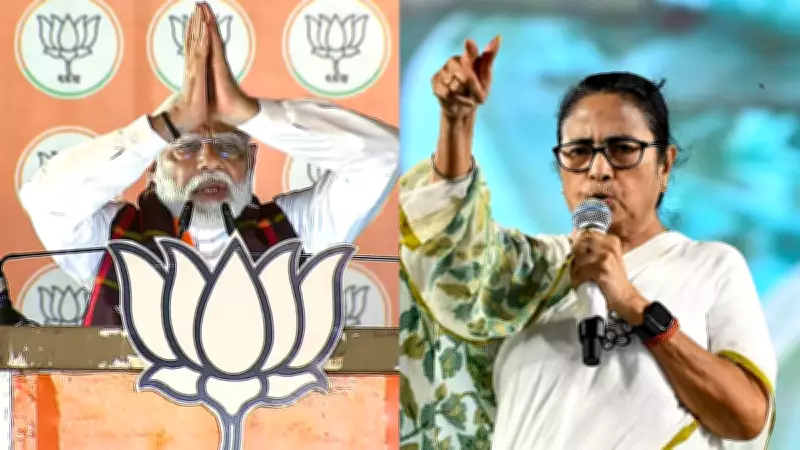
West Bengal Assembly Elections 2026: A Pivotal Political Showdown
The political landscape of West Bengal is already heating up as the state gears up for the 2026 Assembly elections. This electoral battle is expected to be one of the most closely watched in India, with significant implications for national politics. Parties are beginning to lay the groundwork for their campaigns, anticipating a fierce contest that could reshape the state's governance.
Early Strategies and Party Dynamics
Major political players, including the Trinamool Congress (TMC), Bharatiya Janata Party (BJP), and Indian National Congress (INC), are reportedly formulating their strategies well in advance. The TMC, currently in power, aims to consolidate its base by highlighting developmental achievements and welfare schemes. In contrast, the BJP is focusing on expanding its footprint in the state, leveraging national issues and organizational strength. The INC, along with other regional parties, is seeking to regain relevance by forming alliances and addressing local concerns.
Analysts suggest that the elections will be a test of voter sentiment following recent political shifts. The 2021 elections saw a tight race, and the 2026 polls are likely to build on that momentum, with parties vying for every seat in the 294-member Assembly. Key issues such as economic development, social welfare, and law and order are expected to dominate the discourse.

Voter Engagement and Electoral Preparedness
Voter turnout and engagement are critical factors in West Bengal's elections, known for their high participation rates. The Election Commission of India is expected to implement measures to ensure a free and fair poll, including enhanced security and technology-driven processes. Political observers note that early campaigning and outreach efforts could influence voter decisions, especially in rural and urban constituencies with diverse demographics.
Moreover, the role of regional issues versus national narratives will be pivotal. Parties may tailor their messages to address specific local challenges, such as agricultural distress, unemployment, and infrastructure gaps. The outcome could also impact broader political alliances and strategies ahead of the 2029 Lok Sabha elections.
Potential Outcomes and Implications
The 2026 West Bengal Assembly elections are not just a state-level event but a bellwether for Indian politics. A victory for the TMC could reinforce its dominance in eastern India, while a BJP win might signal a shift in the region's political alignment. For smaller parties, the elections offer an opportunity to play kingmaker or influence policy directions.
As parties roll the dice in this high-stakes game, voters will ultimately decide the fate of West Bengal's governance. The elections are poised to be a defining moment, with results that could echo across the country's political spectrum.






