West Bengal Governor's Abrupt Resignation Ignites Political Firestorm
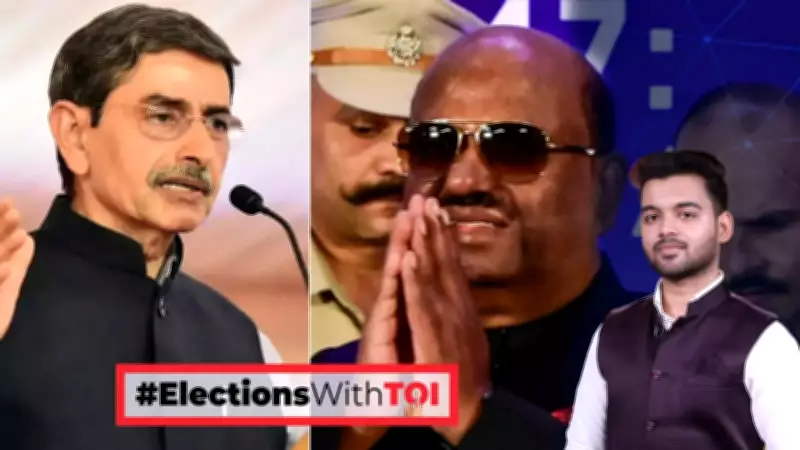
In a dramatic development just weeks before the crucial West Bengal Assembly elections, Governor C.V. Ananda Bose has abruptly resigned from his position, officially citing health reasons. The sudden move has sent shockwaves through the political landscape, with many questioning the timing and underlying motives behind this high-profile change.
Timing Raises Eyebrows Across Political Spectrum
The resignation comes at a particularly sensitive juncture, with election preparations in full swing across West Bengal. Bose, who had served as Governor since 2022, had a tenure marked by both cooperation and significant tensions with Chief Minister Mamata Banerjee's government. His departure at this critical moment has led to widespread speculation about whether health concerns were the genuine catalyst or merely a convenient explanation for a politically motivated reshuffle.
A Tenure of Tensions and Controversies
During his time in office, Governor Bose navigated numerous contentious issues with the state administration. These included:
- Disputes over administrative appointments and bureaucratic postings
- Controversies surrounding university vice-chancellor selections
- Several high-profile disagreements that drew national attention
- Periodic clashes over constitutional boundaries and state-center relations
Despite these tensions, there were also instances of productive cooperation between Raj Bhavan and the state government, particularly on development initiatives and ceremonial functions.
Strategic Appointment of R.N. Ravi
In place of Bose, the Central government has appointed R.N. Ravi, the current Governor of Tamil Nadu, to take charge of West Bengal. Ravi brings a reputation for an assertive approach and has been known for frequent clashes with state governments during his previous assignments. His appointment is being viewed by political analysts as potentially significant for several reasons:
- Assertive Governance Style: Ravi has established himself as a governor willing to challenge state administrations on various issues
- Political Experience: His background includes handling complex political situations in Tamil Nadu
- Central Government Alignment: His appointment suggests a desire for stronger Raj Bhavan oversight during the election period
Political Implications and Analyst Perspectives
Political observers and analysts are deeply divided in their interpretations of this governor swap. Some view it as a routine administrative change necessitated by genuine health concerns, while others see it as a calculated strategic move by the BJP-led Central government. The key questions being raised include:
Is this primarily about ensuring a stronger Raj Bhavan presence during the election period? Many analysts suggest the timing is too coincidental to be purely administrative. With elections approaching, having a governor known for assertive oversight could provide the Central government with enhanced monitoring capabilities and potentially influence the political dynamics in the state.
The broader implications extend beyond immediate election concerns. This change could signal a shift in how the Central government approaches its relationship with opposition-ruled states, particularly those where political battles are intensifying ahead of crucial electoral contests.
Historical Context and Precedents
This is not the first time gubernatorial appointments have sparked political controversy in India. The office of governor has frequently been at the center of state-center tensions, especially during election periods. What makes this particular case noteworthy is:
- The proximity to assembly elections
- The replacement of a governor with one known for more confrontational approaches
- The ongoing political rivalry between the BJP and Trinamool Congress in West Bengal
As West Bengal prepares for what promises to be a fiercely contested election, this gubernatorial change adds another layer of complexity to an already charged political atmosphere. The coming weeks will reveal whether this move represents standard administrative procedure or a strategic political calculation with far-reaching consequences for both state politics and center-state relations in India.