

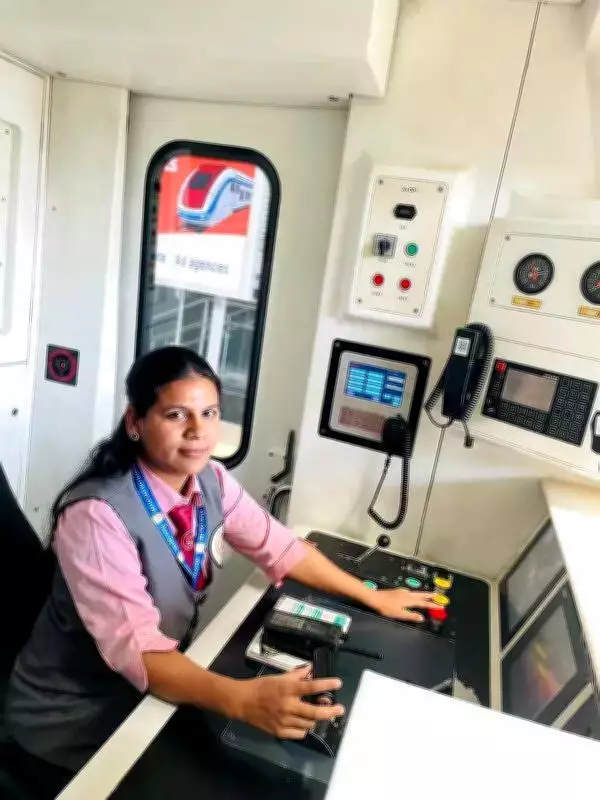
Nagpur Metro's Women Pilots Navigate Flood Crisis to Keep City Moving
In the early hours of September 23, 2023, as Nagpur grappled with one of its most severe flood situations in recent memory, 28-year-old Metro train pilot Priya Bankar understood that her journey to work would be far from ordinary. Torrential rain had relentlessly battered the city throughout the night, resulting in extensive waterlogging across numerous areas and forcing the temporary closure of two Metro stations. Despite these challenging conditions, the pilot train for the day on the Aqua Line still needed to run to maintain essential services.
A Perilous Journey Through Flooded Streets
Bankar, who represents a growing cohort of women handling key operational roles within the Nagpur Metro system, departed her home on Manewada-Besa road at 4am on a two-wheeler. She skillfully navigated through flooded streets, arriving at Prajapati Nagar station in a drenched uniform. Her responsibility was to operate the first service of the day, which required the train to be prepared for operations by 5:15 am, even though revenue service for passengers officially commences at 6am.
"Of course there was fear. The rain was extremely heavy," Bankar recalled, describing the palpable anxiety that morning as rain continued to lash the city and waterlogging was reported along multiple sections of the corridor. Simultaneously, dedicated teams conducted thorough inspections of the overhead electrification systems and other critical infrastructure before the first service could safely begin.

Successful Operation Amidst Adversity
At precisely 6am, Bankar piloted the first train from Prajapati Nagar towards Lokmanya Nagar, with more than 50 passengers boarding the service. Two stations along the route—Dharampeth College and Subhash Nagar—remained temporarily closed due to the overflowing Ambazari Lake and accumulated water in the vicinity. "Despite announcements warning against deboarding at these stations, some passengers wanted to get down at Dharampeth College and pressed the emergency button. We requested them to alight either before Dharampeth or after Subhash Nagar," Bankar explained, highlighting the operational challenges faced.
Following the successful completion of the first service, another female train pilot, Kanhan Thakre, assumed control of the next departure from Prajapati Nagar that same morning. This seamless transition underscored the reliability and competence of the women professionals within the system.
Women Leading Critical Operations Across Nagpur Metro
Currently, the Nagpur Metro network employs 15 female train pilots and 14 female station controllers who manage critical operational responsibilities. As part of Women's Day Week celebrations, two of the network's busiest interchange stations—Sitabuldi Metro Station and Jhansi Rani Square Metro Station—are being operated entirely by all-women teams. Over 30 women employees manage operations across three shifts, with 6 to 8 women in every shift fulfilling roles ranging from station controllers and ticket counter staff to housekeeping and security personnel. Male staff are strategically deployed for specific requirements such as frisking male passengers and maintaining men's washrooms.
Nagpur Metro currently boasts the highest proportion of women employees among all Metro systems in Maharashtra. According to official Metro reports, 49 female employees are working across various projects in Nagpur Metro, compared to 43 in the Pune Metro and only three in the Navi Mumbai Metro system. This significant representation highlights the organization's commitment to gender diversity and empowerment in traditionally male-dominated fields.
The dedication and resilience displayed by Priya Bankar and her colleagues during the flood crisis not only ensured the continuity of vital public transport services but also served as a powerful testament to the expanding role of women in critical infrastructure operations across India.






