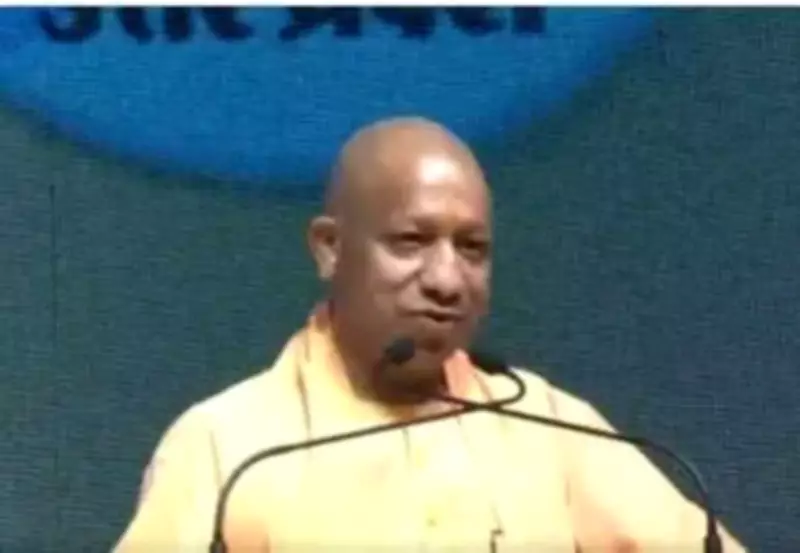
Lucknow: Chief Minister Yogi Adityanath on Monday defended his government's policy against offering namaz on roads, asserting that public spaces cannot be obstructed in the name of religious practices and that the rule of law will apply equally to everyone.
Roads for commuters, not prayers
Speaking at an event organised by a Hindi daily in Lucknow, Yogi said people often ask him whether roadside prayers have ceased in Uttar Pradesh. 'I tell them to come and see for themselves. It simply does not happen anymore,' he remarked, questioning the logic of using roads for religious gatherings. He stressed that roads are meant for commuters, patients, and working citizens, not for obstruction.
The Chief Minister emphasised that prayers should be offered only at designated places of worship. Referring to concerns about large congregations, he suggested that namaz could be offered 'in shifts' within mosques if space is limited. He highlighted the importance of adhering to rules and regulations in a democratic system.

'We are not stopping anyone from offering prayers, but roads cannot be occupied for it,' he added, noting that the government must ensure free movement for the public at all times.
Criticism of previous governments
Accusing previous Uttar Pradesh governments of promoting lawlessness, caste-based politics, and appeasement, Yogi said the copying mafia and criminal syndicates flourished under their patronage, creating an 'identity crisis' for the state. 'Today's New UP is free from riots and curfews,' he asserted, adding that the state has transformed under his administration. He attributed Uttar Pradesh's current growth and recognition to decisive governance and law and order reforms.
Media's role and fake news
Recalling the Emergency imposed in 1975, Yogi praised journalists and editors who, according to him, made great sacrifices to protect democracy in India. He said the media remains a foundational pillar of democracy alongside the legislature, judiciary, and executive.
Expressing concern over the rise of 'fake news' and 'deepfakes' in the digital age, he urged the media to adopt a more constructive and sensitive approach to reporting rather than prioritising sensationalism. 'Reporting done with greater sensitivity instead of sensationalism could have avoided many law and order crises,' he said.