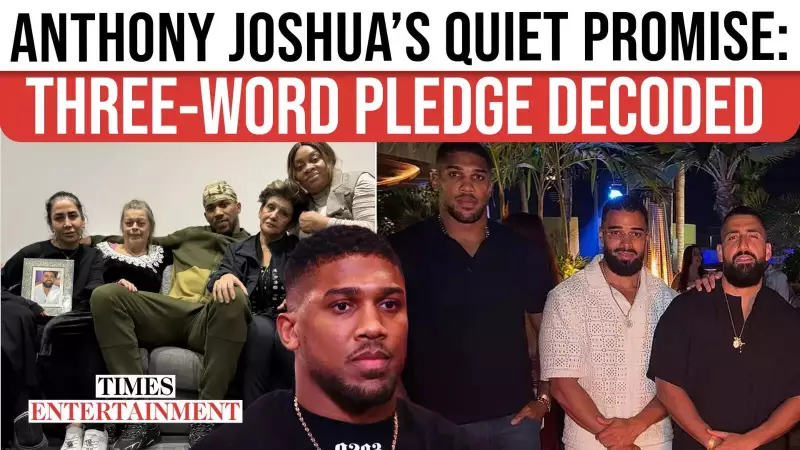
World heavyweight boxing champion Anthony Joshua has publicly addressed a profound personal tragedy for the first time. The athlete spoke out following a devastating car crash that claimed the lives of his two closest friends, Sina Ghami and Latif “Latz” Ayodele.
A Solemn Vow at a Heartbreaking Farewell
During the emotional funeral service held for his departed friends, Joshua stood alongside the grieving families. In a moment that captured global attention, he shared a powerful, three-word message with those assembled and the world: “My Brother’s Keeper.” This simple yet profound pledge, made on January 6, 2026, has left fans and observers searching for its deeper significance.
The statement marks Joshua's first public comments since the accident that not only took his friends but has also thrown his professional boxing career into a state of uncertainty. The loss of Ghami and Ayodele, considered pillars in his inner circle, represents a devastating blow beyond the ring.

The Biblical Roots of a Modern Promise
While the phrase “My Brother’s Keeper” resonated as a personal commitment, its origins are ancient and carry immense weight. The words are a direct reference to the Book of Genesis in the Bible. They originate from the story of Cain and Abel, where Cain, after killing his brother Abel, is asked by God about Abel's whereabouts. Cain's infamous reply, “Am I my brother’s keeper?” is a deflection of responsibility.
By consciously inverting this question into a declarative promise, Anthony Joshua is embracing the very responsibility that Cain rejected. He is publicly vowing to assume a duty of care, protection, and loyalty. In the context of his loss, this pledge is widely interpreted as a lifelong commitment to honour the memories of Ghami and Ayodele and to support their families moving forward.
A Legacy Redefined Beyond Boxing
This moment has sparked conversations about the true measure of a champion's legacy. Analysts and fans alike are now considering how this personal vow might shape Joshua's path forward, both as a man and as a fighter.
The promise suggests a profound shift in perspective, potentially channelling his grief into a purpose that transcends sport. It positions him not just as a guardian for the families left behind, but also as a figure embodying accountability and brotherhood. The strength displayed in this vulnerable moment could redefine his public persona, adding a layer of depth and humanity that resonates far more than any championship belt.
As the boxing world waits to see how this tragedy affects his future in the sport, one thing is clear: Anthony Joshua’s declaration of being his “brother’s keeper” has already etched a defining chapter in his life story. It is a testament to friendship, loss, and the enduring power of a solemn promise made in the face of unimaginable pain.